
Michigan's Myopia Control Specialists
Your Child May Benefit From Myopia Control

Myopia Control - Slow down your child’s myopia progression!
As a parent in Michigan, one of the most proactive steps you can take for your child’s long-term eye health is exploring myopia control. Myopia, or nearsightedness, is more than just a matter of needing stronger glasses each year; it’s a progressive condition that can increase the risk of serious eye diseases in adulthood.
Fortunately, you can do something about it. Modern, clinically-proven treatments can effectively slow down the progression of myopia in children and adolescents. At the Michigan Contact Lens Myopia Management Clinic, we are dedicated to providing the highest standard of myopia control in Michigan. Our specialists use the latest technology to create personalized plans to protect your child’s precious gift of sight.
This guide explains what myopia is, why managing it matters, and which treatment options are available at our Southfield clinic for families across Michigan.

What is Myopia (Nearsightedness)?
Myopia is a common eye condition that causes distant objects to appear blurry while close-up objects remain clear. It occurs when the eye grows too long from front to back, causing light to focus in front of the retina instead of directly on it. This is why it is often referred to as an “elongation” of the eye.
While glasses and standard contact lenses can correct the blurry vision, they do not stop the underlying elongation or the progression of the condition. Addressing the progression of nearsightedness in children in Michigan is the primary goal of our program.
Why Myopia Control in Michigan is Critical
Slowing down myopia is about more than just keeping your child’s prescription low. High levels of myopia are a significant risk factor for developing serious, sight-threatening eye diseases later in life. Effective myopia management in Michigan can help reduce the lifetime risk of:
- Retinal Detachment: The stretching of the eye can thin the retina, making it more prone to tearing or detaching.
- Myopic Maculopathy: A leading cause of irreversible vision loss in highly myopic eyes.
- Glaucoma and Cataracts: The risk of developing these conditions is significantly higher for individuals with high myopia.
By investing in a myopia control Michigan program now, you are investing in your child’s long-term health and vision. Our clinic is a premier destination for this specialized care.
The myopia control treatments we offer
There is no permanent cure for myopia, but we can effectively manage it. Our clinic offers the most advanced, FDA-approved treatments available. After a comprehensive consultation, our specialists will determine the best option for your child.
Orthokeratology (Ortho-K): The Overnight Solution
Orthokeratology, or Ortho-K, is a revolutionary, non-surgical treatment. It involves wearing custom-designed rigid contact lenses overnight to gently and safely reshape the cornea. In the morning, the lenses are removed, and your child can see clearly all day without glasses or daytime contacts. We are proud to provide Orthokeratology in Michigan.
Expert fitting for Ortho-K
Ortho-K is a popular option for active children, and designing and fitting these lenses is something the practice does regularly.
MiSight® 1 Day: The First FDA-Approved Soft Lens
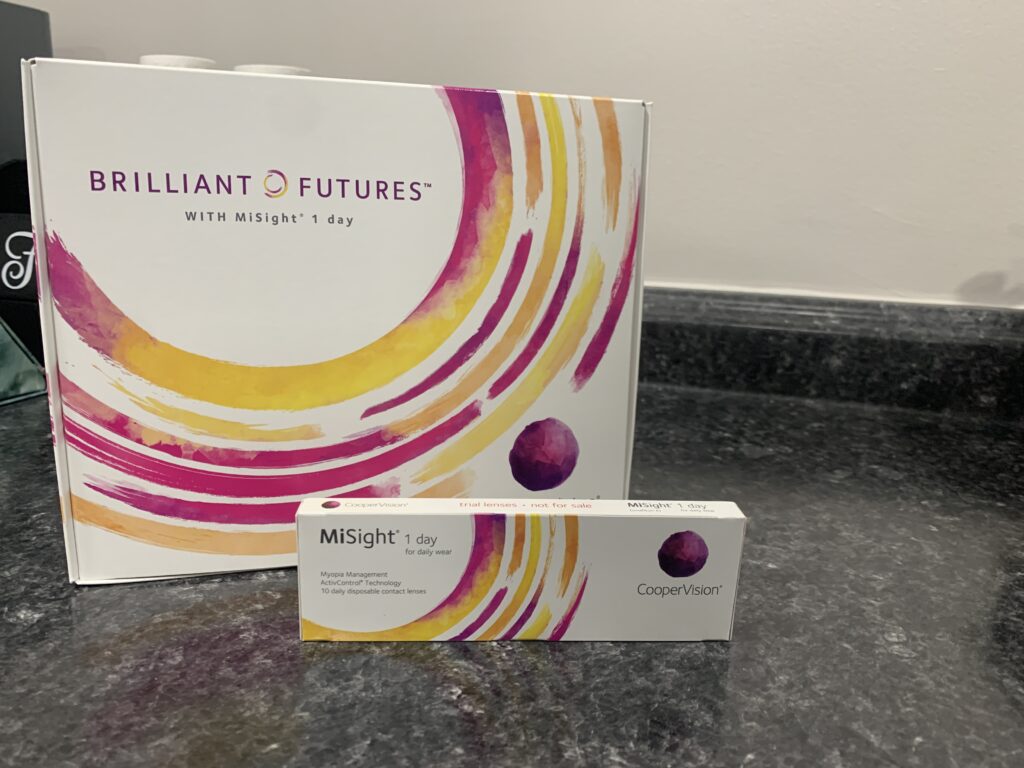
We are proud to be a certified MiSight doctor in Michigan. MiSight® 1 Day is the first and only soft contact lens specifically approved by the FDA to slow the progression of myopia in children. These are convenient, single-use daily lenses that your child wears during the day.
Low-Dose Atropine Eye Drops
For some children, a specially formulated, low-dose of atropine eye drops is an effective treatment. Used once a day, these drops have been clinically shown to significantly slow down the elongation of the eye. They are often used in combination with glasses for vision correction. Contact Michigan Contact Lens to get the best Atropine Eye Drops for Myopia in Michigan.
What to Expect: Your Child’s Journey with Us
Partnering with a specialist for myopia control in Michigan is a collaborative process focused on long-term success.
- The Initial Consultation: Your first visit involves a comprehensive eye exam, precise measurements of your child’s eye length and curvature, and a detailed discussion about the best treatment options for their specific case and lifestyle.
- Creating a Personalized Plan: We don’t use a one-size-fits-all approach. We work with you and your child to select the treatment that makes the most sense. This is the first step in your child’s myopia control plan.
- Ongoing Follow-Up & Monitoring: Myopia management is an ongoing process. We schedule regular follow-up visits to monitor your child’s prescription and eye health, ensuring the treatment is working effectively.
How Michigan Contact Lens Can Help With Myopia Management in Michigan
While myopia currently has no permanent cure, our team at Michigan Contact Lens is dedicated to helping you manage and slow down its progression through a range of innovative treatments. These include:
- Orthokeratology (ortho-k): This is a non-surgical treatment in which the patient wears special contact lenses at night that reshapes the cornea, reducing the need for glasses or daytime contact lenses. Ortho-k has been shown to slow down the progression of myopia in children and adolescents.
- Atropine eye drops : Atropine is a medication that can be used to relax the focusing muscles in the eye and slow down the progression of myopia. It is usually given as eye drops and is most effective in children and adolescents.
- Multifocal contact lenses : These are contacts that have multiple prescriptions, allowing the wearer to see clearly at different distances. They may be able to slow down the progression of myopia in children and adolescents. MiSight contact lenses were the first contact lens to receive FDA approval for slowing myopia progression in children.
By using proven treatments for slowing the progression of myopia, the Michigan Contact Lens Myopia Management Clinic paves the way for a better quality of life and clearer vision for all our patients. We are committed to providing the highest level of care and service to our patients. Contact us today to schedule your myopia management consultation and take the first step toward healthier vision. We see families from across Metro Detroit, including Novi, Troy and Birmingham.

Your Myopia Control FAQ
- What is myopia control and why is it important?
Myopia control refers to the various techniques and treatments aimed at slowing down or halting the progression of myopia (nearsightedness). It is important because high degrees of myopia can increase the risk of eye diseases such as cataracts, glaucoma, and retinal detachment later in life.
- How does myopia control work?
Myopia control in Michigan works by employing different strategies to modify the growth and elongation of the eyeball, which is the underlying cause of myopia progression. These strategies may include the use of specific contact lenses, orthokeratology, pharmacological interventions, and lifestyle changes.
- At what age should myopia control be started?
Myopia control should ideally be started in childhood or early adolescence, as this is the period when most individuals experience rapid myopia progression. However, myopia control can also be effective for adults, although the progression may be slower.
- What are the different methods of myopia control?
Several methods of myopia control are available, including multifocal contact lenses, orthokeratology (corneal reshaping lenses), atropine eye drops, and peripheral defocus modifying glasses. Each method has its own advantages, and the most suitable option can be determined based on factors such as age and lifestyle.
- Are there any risks or side effects associated with myopia control treatments?
While myopia control methods are generally considered safe, some treatments may have potential risks or side effects. For example, orthokeratology lenses can cause temporary discomfort and increase the risk of corneal infections if not properly maintained. Atropine eye drops may cause light sensitivity and near vision blur. It is crucial to consult with an eye care professional to understand and minimize any potential risks.
- Can myopia control completely stop the progression of myopia?
While myopia control methods have been successful in slowing down myopia progression, they may not completely stop it. The degree of effectiveness may vary depending on factors such as the age of the individual, the severity of myopia, and the chosen method of control.
- How long does it take to see results from myopia control methods?
The time required to see results from myopia control methods can vary. Some individuals may experience a significant reduction in myopia progression within a few months, while for others, it may take longer. Regular monitoring by an eye care professional is necessary to assess the effectiveness of the chosen myopia control method.
- Do I need to wear glasses or contact lenses for myopia control?
The need for glasses or contact lenses as a part of myopia control in Michigan depends on the chosen method. For example, some methods like multifocal contact lenses or orthokeratology in Michigan require the use of specific lenses, while others like atropine eye drops or peripheral defocus modifying glasses may not necessitate additional vision correction.
- Are there any lifestyle changes or habits that can help with myopia control?
In addition to specific treatments, certain lifestyle changes can contribute to myopia control in Michigan. These may include spending more time outdoors, taking frequent breaks from near work (such as reading or using digital devices), maintaining good lighting conditions, and practicing proper eye hygiene. These habits can help alleviate eye strain and potentially reduce myopia progression.
- Do you see children for myopia control?
Yes. The practice specialises in advanced contact lenses, and myopia management for children is a core part of that — fitting Ortho-K and MiSight, and monitoring progression over time. Families travel to us from across Metro Detroit for it. We are a specialty practice rather than a routine paediatric clinic, so we work alongside your child’s regular eye doctor rather than replacing them.