
Michigan's Contact Lens Specialists
RGP Contact Lens Fitting in Michigan

Fitting Rigid Gas Permeable Lenses
A rigid gas permeable lens is only as good as its fit. Unlike a soft lens, which drapes over whatever shape your cornea happens to be, an RGP holds its own precisely manufactured shape — so the relationship between that shape and your cornea determines everything: how well you see, how comfortable the lens is, and whether your cornea stays healthy under it.
That is why fitting RGP lenses is a clinical process, not a product selection. Dr. Shira Kresch, OD, MS, FAAO fits rigid gas permeable, hybrid and scleral lenses at Michigan Contact Lens in Southfield, and specialty lens fitting is what this practice does all day.
If you want the background first — what RGP actually means, and why rigid optics beat soft on an irregular cornea — start with what are RGP contact lenses? This page is about the fitting itself.
Who we fit RGP lenses for
- Keratoconus and irregular corneas. Rigid optics are the standard approach, because the tear layer under the lens fills in the irregularity and restores vision glasses cannot reach.
- Astigmatism that soft lenses never stabilise. A soft toric only corrects while it stays rotationally oriented and can shift on a blink. A rigid lens corrects through the tear layer regardless of orientation, so the vision holds still.
- High prescriptions, where rigid lenses can be made with optical quality soft lenses struggle to match.
- Eyes that react badly to soft lenses — rigid materials resist protein deposits, which matters after recurring irritation or lens-related allergy.
- Presbyopia, using multifocal and bifocal rigid designs.
- Post-surgical corneas after LASIK, PRK or RK, where the surface is regular enough for a corneal lens but too irregular for soft optics.
If you have been told you are hard to fit, that is usually a statement about which lenses have been tried rather than about your eyes.
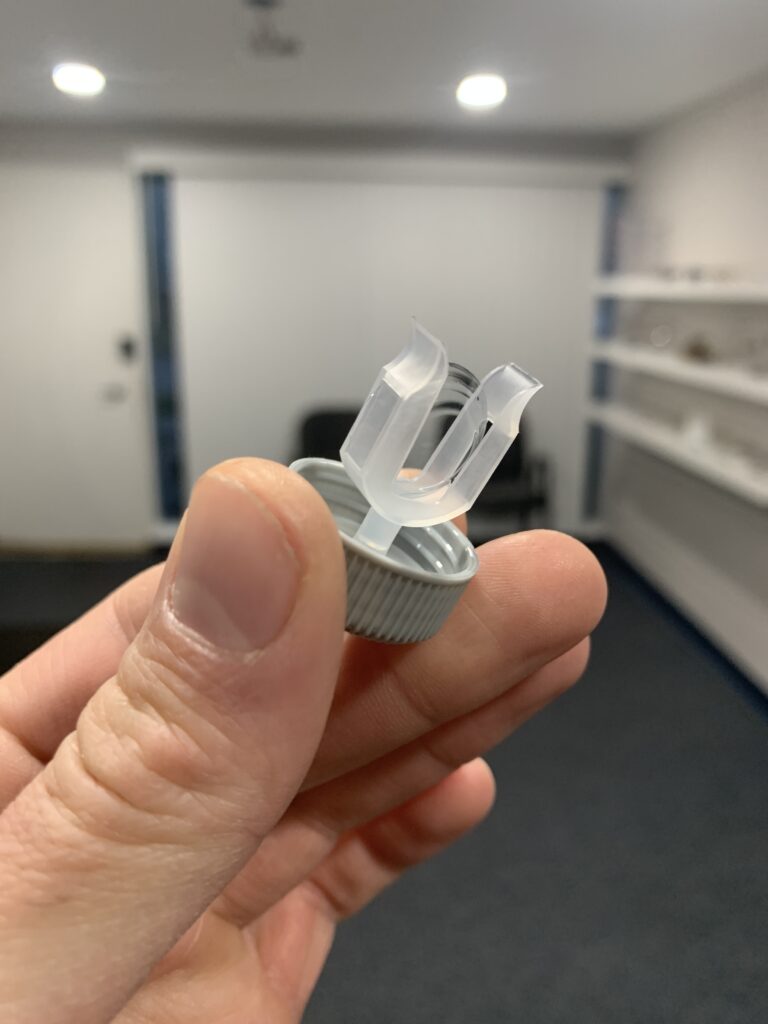
How an RGP lens fitting works here
Step 1 — Corneal topography. Before anything else, we map the shape of your cornea. This is the measurement the whole fit is built on: how steep the cornea is, where its apex sits, how it flattens toward the edge. A rigid lens fitted without that map is an educated guess, and on an irregular cornea an educated guess is not good enough. See our technology.
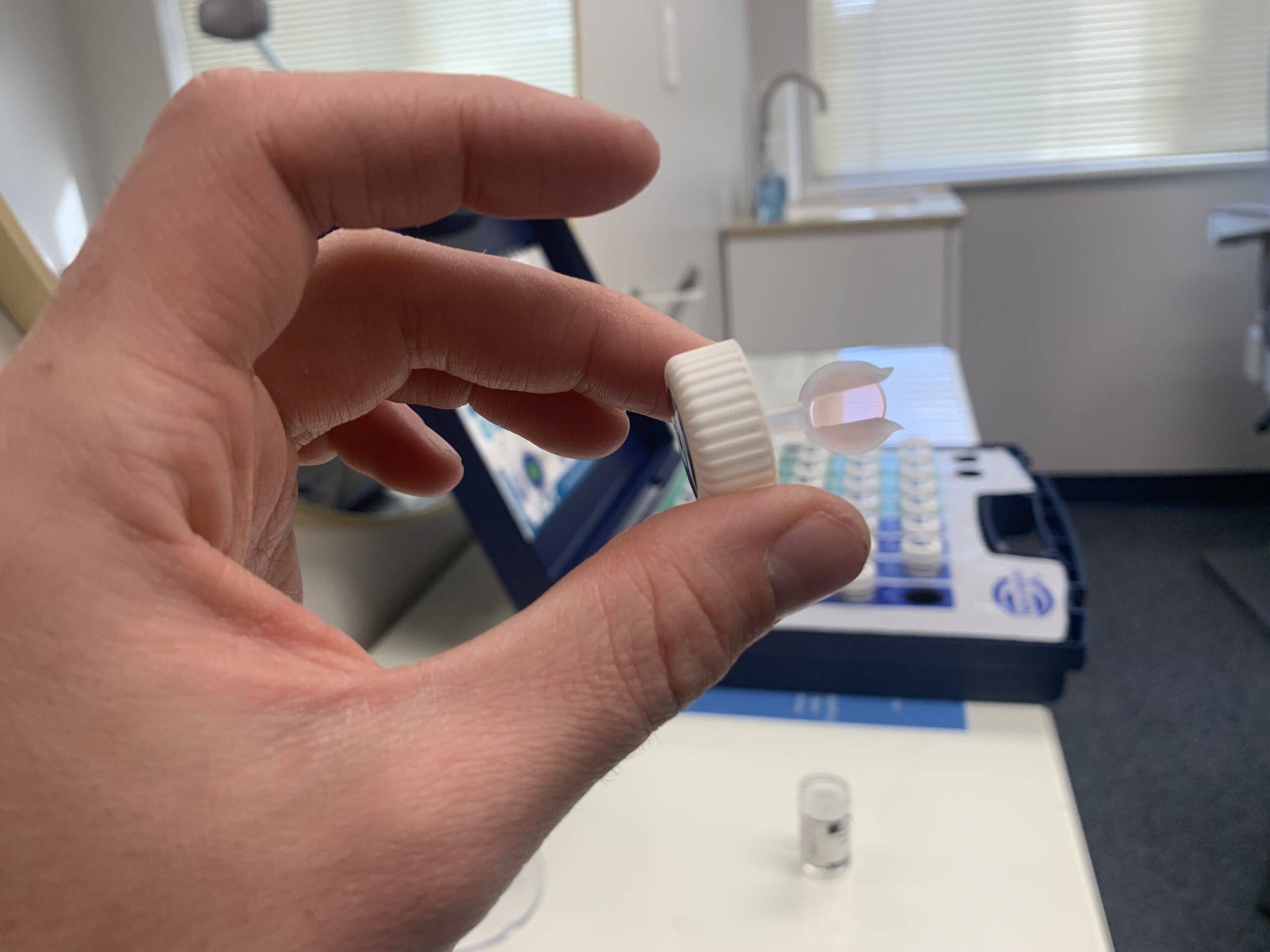
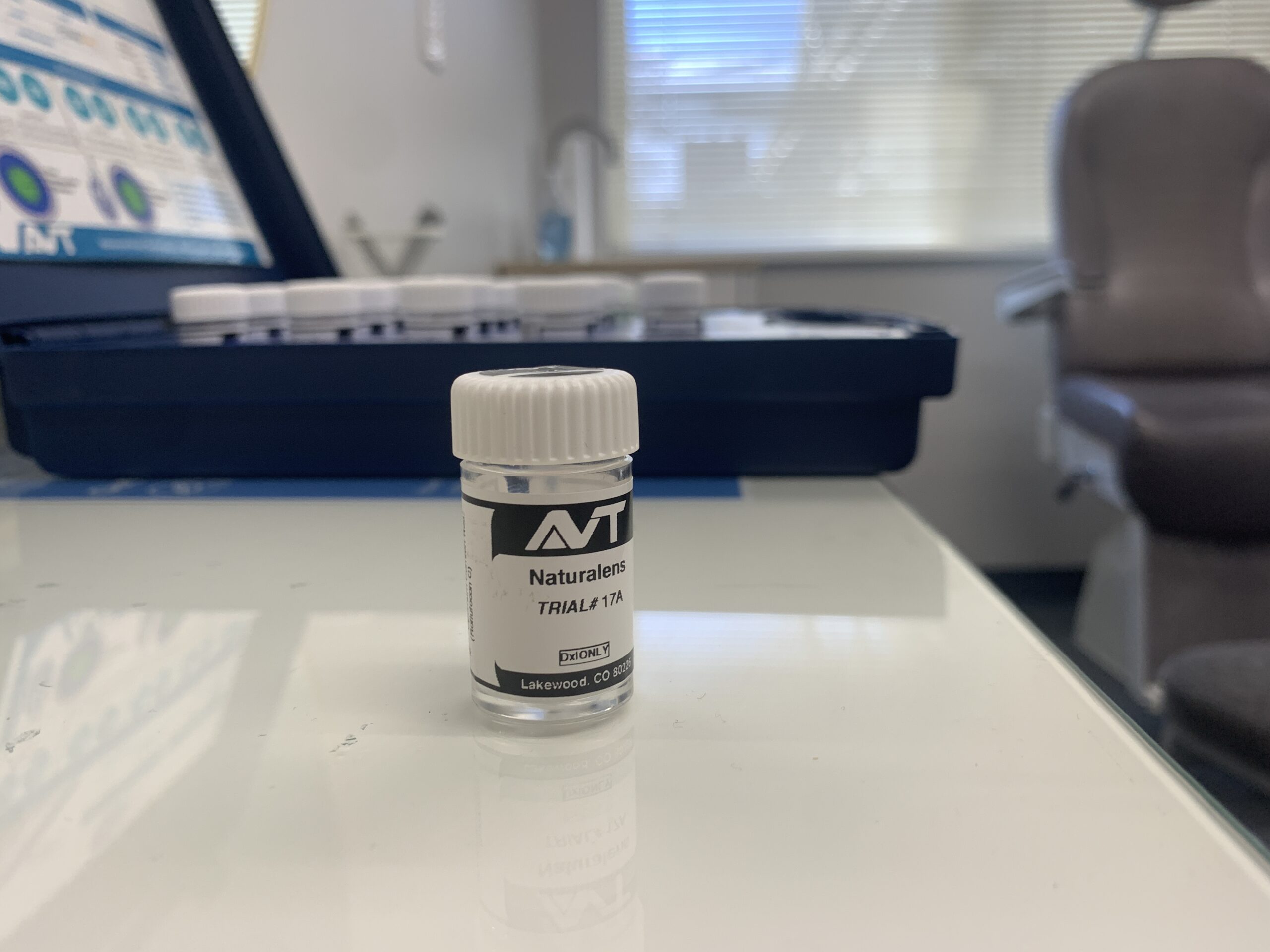
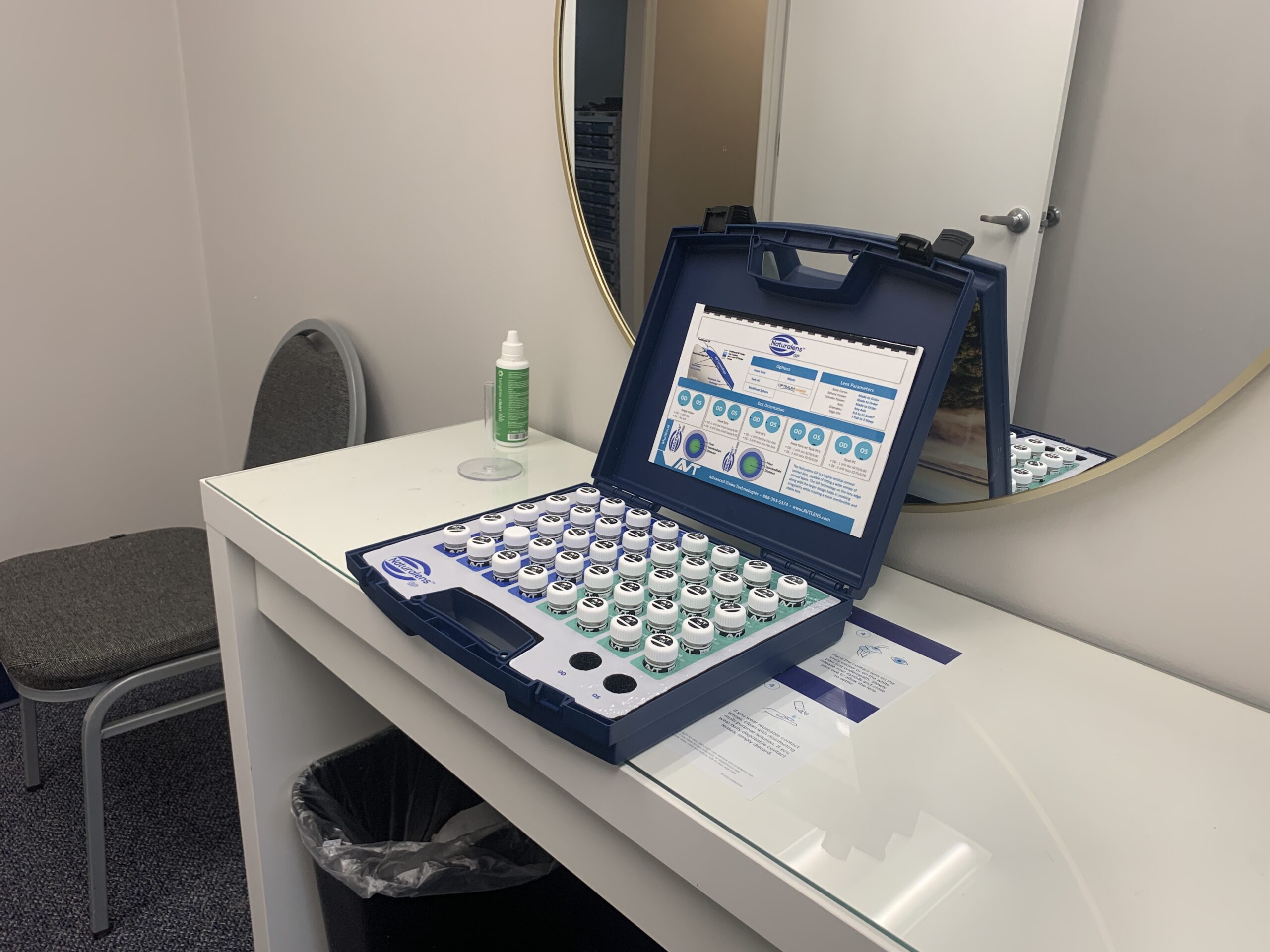
Step 2 — Diagnostic lenses on the eye. We put trial lenses on and assess the fit live rather than predicting it. Under the slit lamp we watch how the lens centres, how it moves with each blink, and how the tear layer sits beneath it — and we check your vision through it, so you find out what your corrected vision could actually be before committing to anything.
Step 3 — Your lenses are ordered to those measurements. Base curve, diameter, power, edge design and material are specified for your eye and the lenses are manufactured. This takes time; it is not a same-day fitting.
Step 4 — Dispensing, training and follow-up. When the lenses arrive we confirm the fit on the eye, then teach insertion, removal, cleaning and storage until you can do it confidently without us. Nobody leaves without that. After that we follow up through the settling period, checking the corneal surface, lens position and vision.
Refinement is part of the process, not a sign it went wrong. A first design often needs a parameter adjusted once or twice before the vision holds all day. That is normal in rigid lens fitting, and it is included rather than billed per visit — which matters, because nobody should be weighing a follow-up appointment against its cost during the settling period.
Adapting to rigid lenses
This is the part people are most apprehensive about, and being told what to expect makes it considerably easier.
For the first few days you will be aware of the lenses. Most patients describe a sense that something is there rather than pain, usually with more watering than normal. Your eyelid is learning the edge of a lens it has not met before. Over one to two weeks that awareness fades for most wearers, and then they stop thinking about it.
What helps:
- Wear them consistently. Adaptation is cumulative, so daily wear adapts you faster than occasional wear. Short bursts restart the process.
- Build up as we direct, rather than pushing for full days immediately.
- Come back if something feels wrong. A lens that is fractionally off can be adjusted, and there is no reason to endure it.
What does not help is pushing through genuine pain. Awareness is normal. Pain, redness, light sensitivity or a drop in vision are not, and they mean the fit needs checking rather than more perseverance.
And if you truly cannot adapt to a corneal RGP, that rules out this lens design, not rigid optics. Hybrid lenses put a rigid centre inside a soft skirt, and scleral lenses vault clear of the cornea entirely — both keep the optics and move the edge off the sensitive tissue. Because we fit all three, a failed RGP fitting elsewhere is a starting point here, not a dead end.
Caring for RGP lenses
Rigid lenses are cleaned and reused rather than discarded, so care is a daily routine:
- Use solutions intended for rigid lenses. Soft lens multipurpose solutions are not interchangeable.
- Never tap water, bottled water or homemade saline. Waterborne organisms cause the corneal infections that actually matter.
- Wash and dry your hands before handling.
- Replace the case regularly — cases grow biofilm.
- Keep your follow-up visits, so the fit and the corneal surface are checked.
Handled properly, a rigid lens lasts years. Your prescription will include the power, base curve, diameter and material, so you always know exactly what you are wearing.
What an RGP fitting costs
There is no single price, because what you are paying for is the process: corneal mapping, lens design, diagnostic fitting, the lenses, handling training, and follow-up with refinements. Rigid lenses are replaced yearly or less often rather than monthly, so the ongoing cost is lower than disposables.
Michigan Contact Lens is out-of-network by choice, which means the clinical decision is Dr. Kresch’s and yours rather than a plan’s. We provide a detailed superbill you can submit for out-of-network reimbursement, and we accept HSA and FSA funds, CareCredit and in-house payment plans — see Insurance & Payment Options.
RGP fitting in Southfield and Metro Detroit
Michigan Contact Lens is at 17000 W. 10 Mile Rd., Suite 150, Southfield, MI 48075, fitting patients from Birmingham, Royal Oak, Troy, Farmington Hills, West Bloomfield, Novi, Oak Park, Huntington Woods, Rochester Hills and Detroit.
Because we fit rigid, hybrid and scleral lenses, the recommendation follows your cornea rather than what we happen to stock. Your initial specialty consultation is complimentary and no referral is needed — bring your current lenses and your history.
Book a Free Consultation or call (248) 545-2800
RGP Fitting Questions
- How does an RGP contact lens fitting work?
It runs in four stages. We map the shape of your cornea with corneal topography, then fit diagnostic lenses on the eye so the fit and your vision can be assessed live rather than predicted. Your lenses are ordered to those measurements, and when they arrive we check the fit, teach you insertion, removal and care until you are confident, and then follow up through the settling period. Parameters are often refined once or twice — that is normal and it is included.
- How long does it take to get used to RGP lenses?
Most wearers adapt within one to two weeks. For the first few days you will be aware of the lenses — a sense that something is there, often with more watering than usual — and that settles as your eyelid learns the lens edge. Consistent daily wear adapts you faster than wearing them in short bursts, because adaptation is cumulative. Awareness is expected; pain, redness or light sensitivity are not, and mean the fit needs checking.
- Can I wear RGP lenses if I have dry eyes?
Mild to moderate dry eye is usually workable, often with the ocular surface treated first so the lens has a healthier surface to sit on. Significant dry eye is a different matter — a corneal RGP can make it worse. In that situation scleral lenses are generally the better answer, because they hold a reservoir of saline against the cornea all day rather than resting on a dry surface. We assess the surface before recommending a lens type, not after.
- Can RGP lenses correct keratoconus?
Yes, and rigid optics are the standard approach. The lens holds its own shape and the tear layer beneath it fills in the irregular cornea, which is what restores sharp vision where glasses and soft lenses cannot. For mild to moderate keratoconus a corneal RGP often works well. As the cone steepens or decentres, hybrid or scleral lenses hold more reliably, and we fit all three so the recommendation can follow your cornea.
- How often will I need follow-up visits?
More often at first, then settling into a routine. Through the fitting and settling period we check the corneal surface, the lens position and movement, and your vision — catching changes before you would notice them. After that, annual review at minimum, and sooner if vision or comfort changes. Rigid lens follow-up is not a formality; it is how the cornea stays healthy under a lens worn for years.
- How much does an RGP lens fitting cost?
There is no single price, because the fitting is a clinical process rather than a product — corneal mapping, lens design, diagnostic fitting, handling training and follow-up. Rigid lenses are replaced yearly or less often rather than monthly, so the ongoing cost is lower than disposables. Michigan Contact Lens is out-of-network by choice and provides a detailed superbill for out-of-network reimbursement; HSA and FSA funds, CareCredit and in-house payment plans are accepted. Your initial consultation is complimentary.