Two of the most popular myopia-control options for children are MiSight soft contact lenses and orthokeratology (Ortho-K). Both can slow nearsightedness, but they work in very different ways. Here’s a parent-friendly comparison to help you understand the choice.
What are MiSight lenses?
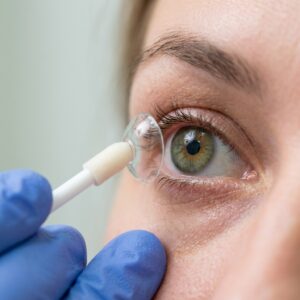
MiSight is a soft, daily-disposable contact lens designed specifically to slow myopia progression in children, worn during waking hours like a normal contact lens and thrown away each night. Because they’re soft and single-use, they’re comfortable from day one and simple to manage. See how myopia control contact lenses work for the mechanism.
What is Ortho-K?
Orthokeratology uses custom rigid lenses worn overnight that gently reshape the cornea while your child sleeps. They’re removed in the morning, leaving clear vision all day with no lenses or glasses. Learn the basics in what is Ortho-K? and safety details in is Ortho-K safe for children?
How they compare
- When they’re worn: MiSight during the day; Ortho-K overnight.
- Daytime freedom: Ortho-K means no lenses or glasses during the day — great for sports and swimming. MiSight means wearing lenses while awake.
- Comfort and adaptation: MiSight is soft and comfortable immediately; Ortho-K lenses are rigid and take a short adjustment period, though they’re worn while asleep.
- Candidacy: both suit many children, but the ideal choice depends on your child’s prescription, corneal shape, and maturity for handling lenses.
- Hygiene and care: MiSight is disposable with minimal cleaning; Ortho-K requires careful nightly cleaning and storage.
- Reversibility: both are reversible — stopping either returns the eye to its baseline over time.
Which is right for your child?
An active child who swims or plays sports may love the lens-free days of Ortho-K, while a family that prefers the simplicity of disposables may lean toward MiSight. A child’s age, responsibility level, and prescription all factor in. There’s rarely a single “best” — there’s a best fit for your child, which is what a consultation determines.
What about other options?
MiSight and Ortho-K aren’t the only tools — low-dose atropine drops and specialty glasses also play a role. See the full picture in myopia control options compared and our myopia control overview.
Not sure which myopia control option fits your child?
Dr. Shira Kresch offers children’s myopia control at Michigan Contact Lens in Southfield, serving families across Metro Detroit. Your child’s initial consultation is complimentary.