

Many people notice that reading a text message, checking a menu, or working on a laptop becomes harder with age. At the same time, they may still need help seeing clearly at a distance. This is where multifocal contact lenses can help. A multifocal contact lens is designed to correct both near and distance vision in one lens. They are commonly used for people with presbyopia, a normal age related change that makes close up vision harder over time.
A multifocal contact lens is a type of contact lens that contains more than one prescription power. This allows the eye to focus on objects at different distances, such as reading up close, using a computer, and seeing clearly farther away. The National Eye Institute explains that multifocal contact lenses help correct both near and distance vision, and they may be useful for people who have presbyopia along with nearsightedness or other refractive errors.
In simple terms, these lenses are made for people who need more than a single vision correction. Instead of switching between regular contact lenses and reading glasses, some patients can use multifocal contacts for a smoother day to day visual experience.
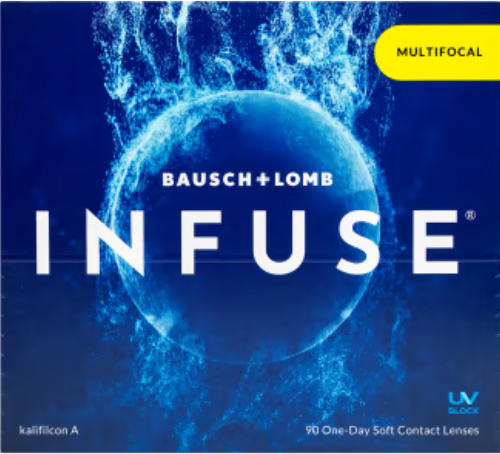
Multifocal contact lenses work by combining different focusing zones into one lens. These zones are designed to help the eye handle vision at more than one distance. Some designs are similar to bifocals, with separate areas for near and distance vision, while others work more like progressive lenses without a visible line.
Your brain learns to use the part of the lens that gives the clearest image for the task you are doing. For example, when reading, your eyes use the near vision portion. When driving or looking across a room, your eyes rely more on the distance portion. This adjustment can take a little time, which is why some patients need a short adaptation period when first wearing multifocal contact lenses
Multifocal contact lenses are often recommended for adults who are developing presbyopia. Presbyopia usually becomes more noticeable in the forties and beyond, when the natural lens inside the eye becomes less flexible and close work becomes harder. People may find themselves holding reading material farther away or needing brighter light for close tasks.
You may be a good candidate for multifocal contact lenses if you:
Need help with both near and distance vision
Want to reduce your dependence on reading glasses
Already wear contact lenses and are noticing new trouble with close up tasks
Prefer one lens solution for reading, screen use, and distance vision
An eye exam and contact lens fitting are the best ways to know whether multifocal lenses are right for your eyes and your lifestyle.
One of the biggest advantages of multifocal contact lenses is convenience. Many patients like the ability to handle different visual tasks without constantly switching between contacts and reading glasses. These lenses can support daily activities such as reading, driving, working on a computer, and using a phone.
Other potential benefits include:
Clearer vision at multiple distances
Less need for separate reading glasses
A more natural look compared with bifocal eyeglasses
Greater flexibility for active lifestyles
For many patients, the goal is not just vision correction, but making everyday life easier and more comfortable.
Not exactly. Bifocal contact lenses are one type of lens that separates two vision powers, usually near and distance. Multifocal contact lenses are a broader category that may include bifocal style designs as well as progressive style designs with a more gradual transition between viewing zones.
This is why patients often hear the word multifocal more often today. It covers several lens designs that aim to improve vision at different distances in one contact lens.
Multifocal contact lenses are most commonly used for presbyopia, but they may also help patients who have presbyopia along with nearsightedness or farsightedness. In some settings, specific multifocal soft contact lenses are also used for myopia management in children, though that is a separate use from adult presbyopia correction.
For adults, the main purpose is usually to provide more functional vision for both close work and distance tasks.
A multifocal lens fitting is more personalized than a basic contact lens prescription. Your eye doctor will check your vision, eye health, tear film, pupil behavior, and how your eyes work together. They will also ask about your daily activities, such as reading time, computer use, driving habits, and whether you spend long hours in dry or air conditioned settings.
Because multifocal contacts come in different designs and materials, finding the right fit may take more than one trial lens. Some patients do very well right away, while others need small prescription or design changes before finding the best match. This is normal and part of the fitting process.
Yes, they can. Some people adapt quickly, while others need a little more time. During the first few days or weeks, vision may feel different from what you are used to with single vision contacts or glasses. Your brain is learning how to use multiple focusing zones efficiently.
This does not mean the lenses are failing. It often means your eyes and brain need time to adjust. Follow up visits are important because your eye doctor can fine tune the lens if needed.
Not always. Some patients do very well with multifocal lenses, while others may do better with other options depending on their prescription, eye shape, tear quality, or visual needs. For example, patients with significant dry eye, certain corneal issues, or very specific visual demands may need a different contact lens approach.
That is why a proper contact lens evaluation matters. The right lens is not just about the prescription. It is also about comfort, eye health, and how well the lens supports your daily routine.
Multifocal lenses can be very helpful, but success often depends on careful fitting and follow up. A contact lens specialist can evaluate whether multifocal lenses match your prescription, eye health, and lifestyle. They can also help if you have dry eye, trouble with lens comfort, or a more complex vision history.
At Michigan Contact Lens, patients receive individualized care based on their visual needs and eye health. If you are having trouble reading up close, relying more on reading glasses, or looking for a more convenient option for everyday vision, a multifocal contact lens evaluation may be the next step.
Book your contact lens exam at Michigan Contact Lens and find out if multifocal contact lenses are the right fit for your vision needs. Our team can help you get clear, comfortable vision for both near and distance tasks.
So, what is a multifocal contact lens? It is a contact lens designed to help you see at more than one distance by combining multiple prescription powers in a single lens. For many adults with presbyopia, it can be a practical option for clearer vision during daily tasks like reading, screen use, and driving.
The best way to know whether multifocal contact lenses are right for you is to have a professional eye exam and fitting. The right lens can make a real difference in both your comfort and your daily routine.
During a multifocal contact lens exam, the optometrist will assess your vision needs at various distances. They will also evaluate your eye health and perform a comprehensive eye exam. Additionally, they will determine the specific prescription and type of multifocal contact lenses that will suit your individual needs.
Multifocal contact lenses are generally recommended for individuals over the age of 40 who have presbyopia. Presbyopia is an age-related condition that causes difficulty focusing on close objects. However, the suitability of multifocal contact lenses depends on various factors, including the patient’s eye health, lifestyle, and visual demands.
No, there are different types of multifocal contact lenses available. Some lenses provide simultaneous vision for both near and distance vision, while others offer segmented vision, where one part of the lens focuses on near objects and the other on distant objects. The optometrist will determine the most suitable type of multifocal contact lenses based on your specific vision needs.
Yes, it may take some time for your eyes to adjust to multifocal contact lenses. Some individuals may experience initial discomfort or difficulty adapting to the lens design. However, most people find that their eyes adapt within a few days to a couple of weeks. Your optometrist can provide tips for a smooth transition and monitor your progress during follow-up visits.
Multifocal contact lenses typically cost more than regular contact lenses due to their advanced design and specialized features. The price may also vary depending on the brand, material, and prescription strength. However, the long-term convenience and reduced need for multiple pairs of glasses often outweigh the initial cost for many people. That said, Michigan Contact Lens pricing is always extremely competitive, cheaper than 1-800-Contacts and Costco.
Like any contact lenses, multifocal contact lenses can cause side effects such as dryness, discomfort, or irritation. These can usually be managed by using lubricating eye drops, properly cleaning and caring for the lenses, and following your optometrist’s instructions. It is important to report any persistent or severe side effects to your eye care professional.
Yes, there are multifocal contact lenses specifically designed for individuals with astigmatism. These lenses are known as toric multifocal contact lenses. They correct both presbyopia and astigmatism, providing clear vision at all distances. Consult your optometrist to determine if toric multifocal contact lenses are suitable for your specific needs. These contact lenses include the Ultra Multifocal for Astigmatism and the Biofinity Toric Multifocal.
The lifespan of multifocal contact lenses depends on various factors, including the type of lens, how well they are cared for, and the frequency of use. Disposable multifocal lenses are typically worn for a designated period (e.g., daily, bi-weekly, monthly) before being replaced. Custom-made or specialty multifocal lenses may have a longer lifespan. Your optometrist will provide guidance on the appropriate replacement schedule for your specific lenses.
Of course! However, it is important to have a comprehensive eye examination and multifocal contact lens fitting with an optometrist to ensure a proper transition. The optometrist will assess your vision needs and determine the most suitable multifocal lens design for your eyes.
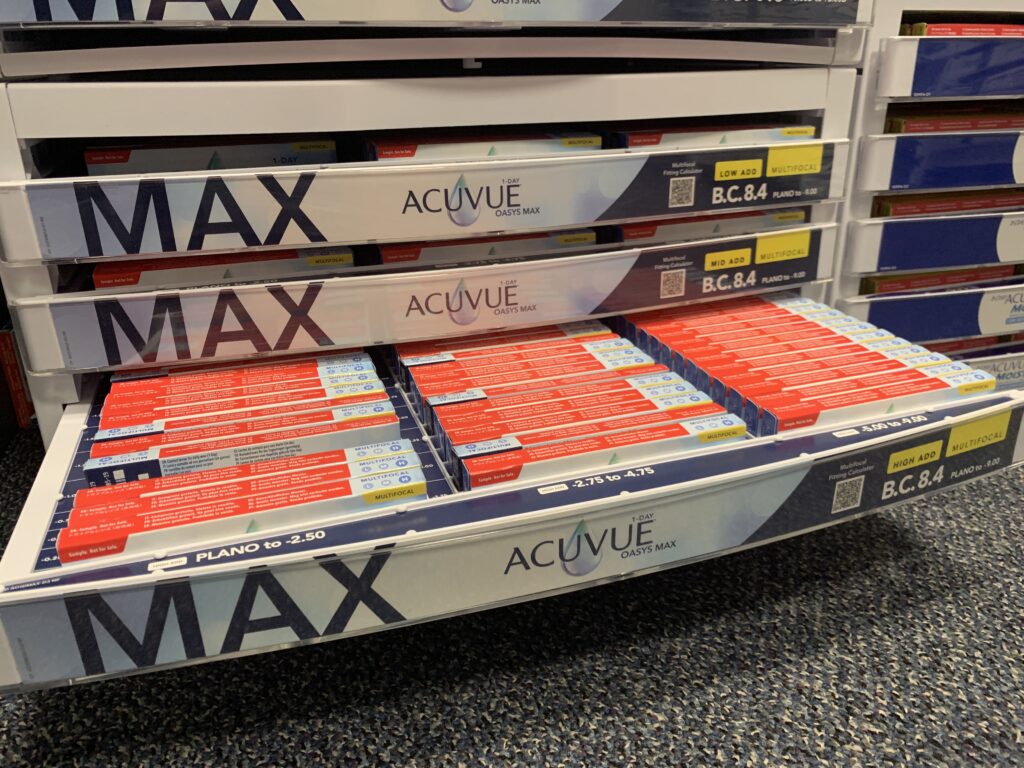
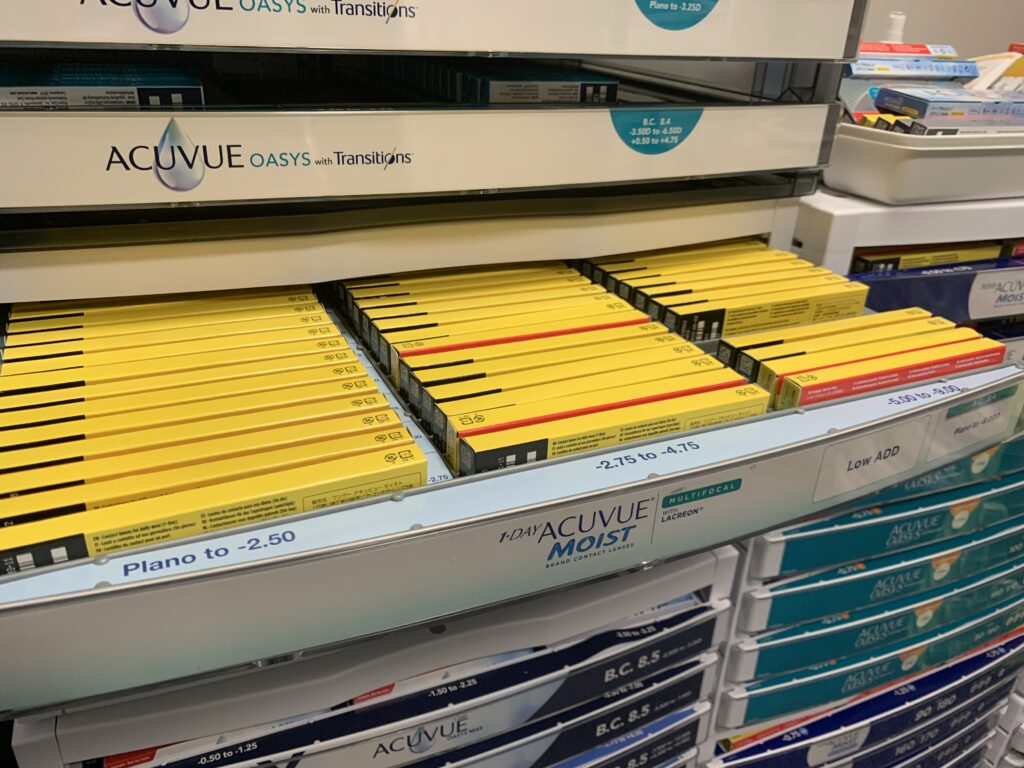
There are a few popular multifocal lenses on the market. Infuse Multifocal, Oasys Max Multifocal, and Biotrue Multifocal are a few of the lenses Dr. Kresch likes to use.
Many adults begin noticing presbyopia in their forties or later, which is when multifocal contact lenses often become useful.
They are not automatically better for everyone. Some patients prefer multifocal contacts for convenience, while others may still prefer glasses depending on comfort, vision needs, and eye health.
Make an appointment on WhatsApp