
Vision After Cross-Linking: Why It’s Still Blurry, and What Fixes It
Your cross-linking worked, and your vision is still blurry. That is the expected outcome, not a complication.
It is the single most common thing patients tell us after being referred back, and almost nobody is warned about it in advance. So here is the plain version.
Corneal cross-linking is a stabilising procedure. It stiffens the cornea so keratoconus stops getting worse. It does not reshape the cornea, so the irregularity that was blurring your vision before is still there afterwards — and an irregular cornea cannot be corrected by glasses or soft lenses, because neither can compensate for a surface with no regular curve.
Cross-linking protected your cornea’s future. Correcting what you can see today is a separate job, and for most patients it means a specialty lens.
We did not perform your cross-linking, and we would not — Dr. Shira Kresch, OD, MS, FAAO is an optometrist, and CXL is surgery. What this practice does is the part your surgeon hands back: mapping the cornea once it has settled and fitting the lens that actually restores your vision. Patients come to us for exactly this from across Metro Detroit, including people whose cross-linking was done years ago and who were never fitted properly afterwards.
What Happens After Corneal Cross-Linking?
Corneal cross-linking works by strengthening the weak collagen fibers inside the cornea. The procedure uses riboflavin (vitamin B2) eye drops combined with UV-A light to create new chemical bonds within the cornea, stopping it from bulging further.
However, while cross-linking prevents worsening, it doesn’t reshape or smooth the cornea. Most patients still experience blurred or distorted vision even after successful surgery.
That’s why doctors often recommend scleral lenses after full healing, to restore clear vision without stressing the newly treated cornea.
Why Scleral Lenses Are Recommended After CXL
Scleral lenses are ideal for post-CXL recovery because of how they fit. Unlike standard contact lenses, scleral lenses vault over the cornea and rest on the white part of the eye (the sclera). This design creates a liquid-filled chamber between the lens and the cornea, offering multiple benefits after surgery.
See why Scleral Lenses are preferred:
Protect the Healing Cornea
Since scleral lenses never touch the corneal surface, they reduce friction and irritation. This makes them safe to wear once your doctor confirms healing.
Restore Vision Quality
The fluid layer beneath the lens fills in irregularities caused by keratoconus, giving you smooth, crisp vision that glasses or soft contacts can’t achieve.
Improve Comfort
Scleral lenses keep your eyes moist throughout the day, easing dryness that sometimes occurs after CXL.
Delay or Avoid Further Surgery
For many patients, scleral lenses significantly reduce the need for corneal transplants or other surgical corrections by improving function and comfort.
When Can You Start Wearing Scleral Lenses After CXL?
The recovery timeline depends on the type of cross-linking procedure you’ve had:
- Epithelium-on (Transepithelial) CXL – Healing is quicker because the outer layer of the cornea remains intact. Most patients can resume lens wear within 2 to 4 weeks , depending on the doctor’s evaluation. Epithelium-off CXL – The surface layer is removed for deeper treatment. Healing takes longer, so lens wear typically resumes after 6 to 8 weeks .
Dr. Shira Kresch carefully monitors healing progress through follow-up visits. Only after confirming that your cornea has stabilized and there’s no residual haze will scleral lens fitting begin.
The Scleral Lens Fitting Process After Cross-Linking
Michigan Contact Lens‘s every scleral lens fitting after cross-linking is carefully customized to your healing cornea. Our process includes detailed eye evaluation, advanced corneal mapping, and a diagnostic trial to ensure safety and precision. Once your lenses are finalized, we monitor your progress through regular follow-ups for lasting comfort and clear vision.
How Scleral Lenses Improve Post-CXL Vision
Scleral lenses don’t just make vision clear, they improve overall visual function and quality of life.
Reduced Halos and Glare
After cross-linking, patients often notice glare or halos at night. Scleral lenses help minimize these issues by smoothing optical irregularities on the cornea. This results in clearer, more comfortable night vision.
Sharper Focus
Scleral lenses create a stable, uniform surface over the cornea, improving how light enters the eye. This significantly enhances clarity and sharpness, especially for those with irregular corneas caused by keratoconus.
Comfortable for Long Wear
The built-in fluid layer keeps eyes hydrated and cool throughout the day. This makes scleral lenses ideal for extended wear, providing lasting comfort and reducing irritation or dryness.
In fact, studies show that patients fitted with scleral lenses after corneal cross-linking often report 20/20 to 20/25 visual acuity improvements within the first few weeks of wear.
Are Scleral Lenses Always Necessary After Cross-Linking?
Not everyone needs scleral lenses after CXL. The necessity depends on your pre-surgery vision and corneal stability:
- If your vision was functional with glasses before surgery, you may not need scleral lenses immediately
- If your vision remains blurred or distorted post-CXL, scleral lenses can dramatically improve clarity.
- Patients with moderate to severe keratoconus often find scleral lenses essential for daily activities like driving or reading.
Michigan Contact Lens always begins with a vision evaluation to determine the most effective next step, whether that’s updating your glasses prescription or starting scleral lens fitting.
Cost of Scleral Lenses After Corneal Cross-Linking
Pricing varies with your condition, lens design and fitting complexity — there is no single figure, which is why we quote you after looking at your eyes. What the fitting fee covers is consistent: diagnostic imaging, the fitting sessions, and follow-up care. See what drives the cost of scleral lenses.
While that may sound high, remember these lenses are medically necessary for many keratoconus patients, and many insurance plans may cover them fully or partially when prescribed for post-surgical vision correction.
At Michigan Contact Lens, our team assists patients in verifying insurance benefits and exploring cost-effective options.
Care for Scleral Lenses After Surgery
Proper care ensures long-lasting results and eye health.
- Always use preservative-free saline for lens insertion .
- Clean and disinfect your lenses daily using recommended solutions.
- Avoid overwearing lenses — follow your doctor’s wearing schedule strictly.
- Attend regular checkups to monitor eye health and lens condition.
Why Choose Michigan Contact Lens for Post-CXL Scleral Fittings?
There’s no substitute for experience when it comes to post-surgical lens care.
Here’s why patients across Michigantrust Dr. Shira Kresch and our team:
- Specialized in keratoconus and post-surgical corneal management
- Advanced imaging technology for perfect fits
- Gentle, patient-centered care focused on comfort and safety
- Proven track record of improving post-CXL vision outcomes
Whether you live in Ann Arbor, Detroit, or anywhere across Michigan, our clinic provides the highest level of care for scleral lens fitting after corneal cross-linking.
Schedule Your Consultation Today
If you’ve undergone corneal cross-linking and still struggle with blurry or distorted vision, scleral lenses could be the key to restoring your clarity and comfort.**Book an appointment**with Dr. Shira Kresch at Michigan Contact Lens today, and experience how custom scleral lenses can help you see clearly again.
Frequently Asked Questions
- Can I wear scleral lenses after corneal cross-linking?
Yes. Once your cornea has fully healed, scleral lenses are safe and effective for restoring clear vision.
- How long after CXL can I start wearing lenses?
Most patients can begin fitting 4–8 weeks post-surgery, depending on recovery and doctor approval
- Do scleral lenses help improve vision after CXL?
Absolutely. They smooth out corneal irregularities and reduce glare, ghosting, and blurriness caused by keratoconus.
- Are scleral lenses covered by insurance after CXL?
Often partially, through out-of-network reimbursement. Lenses fitted after cross-linking are usually prescribed as medically necessary for keratoconus, which is the situation plans are most likely to reimburse. We are out-of-network by choice, so you receive a detailed superbill to submit to your plan, and the amount reimbursed depends on your own out-of-network benefits.
- Where can I get scleral contact lenses for keratoconus near me?
You can schedule a consultation with Michigan Contact Lens, serving patients across Michigan for advanced scleral lens fittings.
Related reading
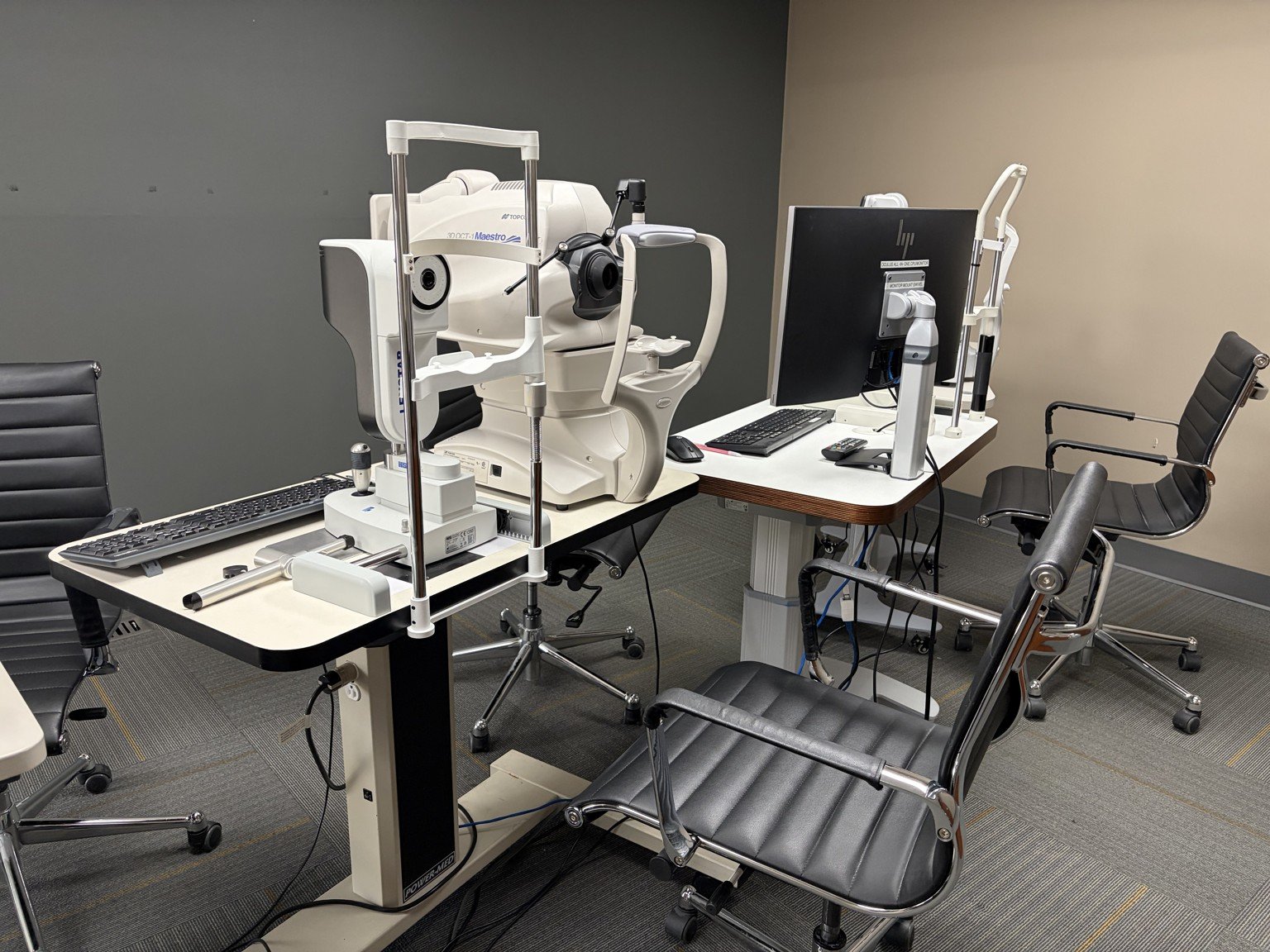
What Happens After You Refer A Patient | Michigan Contact Lens
For referring doctors: the specialty lens pathway step by step — what we do at each visit, what your patient is told, and exactly what comes back to you.

How Many Corneal Transplants Can You Have? | Michigan Contact Lens
Repeat corneal transplants are possible, but each one is a harder ask than the last. When a regraft is needed — and when a lens over the graft is the better answer.

Why Soft Lenses Fail On An Irregular Cornea | Michigan Contact Lens
A soft lens drapes over the cornea and reproduces its shape. On an irregular cornea that is the whole problem — and no amount of refitting changes it.
Finding A Scleral Lens Specialist In Metro Detroit
Looking for a scleral lens specialist near Detroit? What to look for, the conditions we treat, and how to book a free consultation in Southfield, MI.
Vision After A Corneal Transplant | Scleral Lenses
Blurry vision after a corneal transplant is normal, not a failure. Why it happens, the graft types, rejection warning signs, and how scleral lenses correct it.
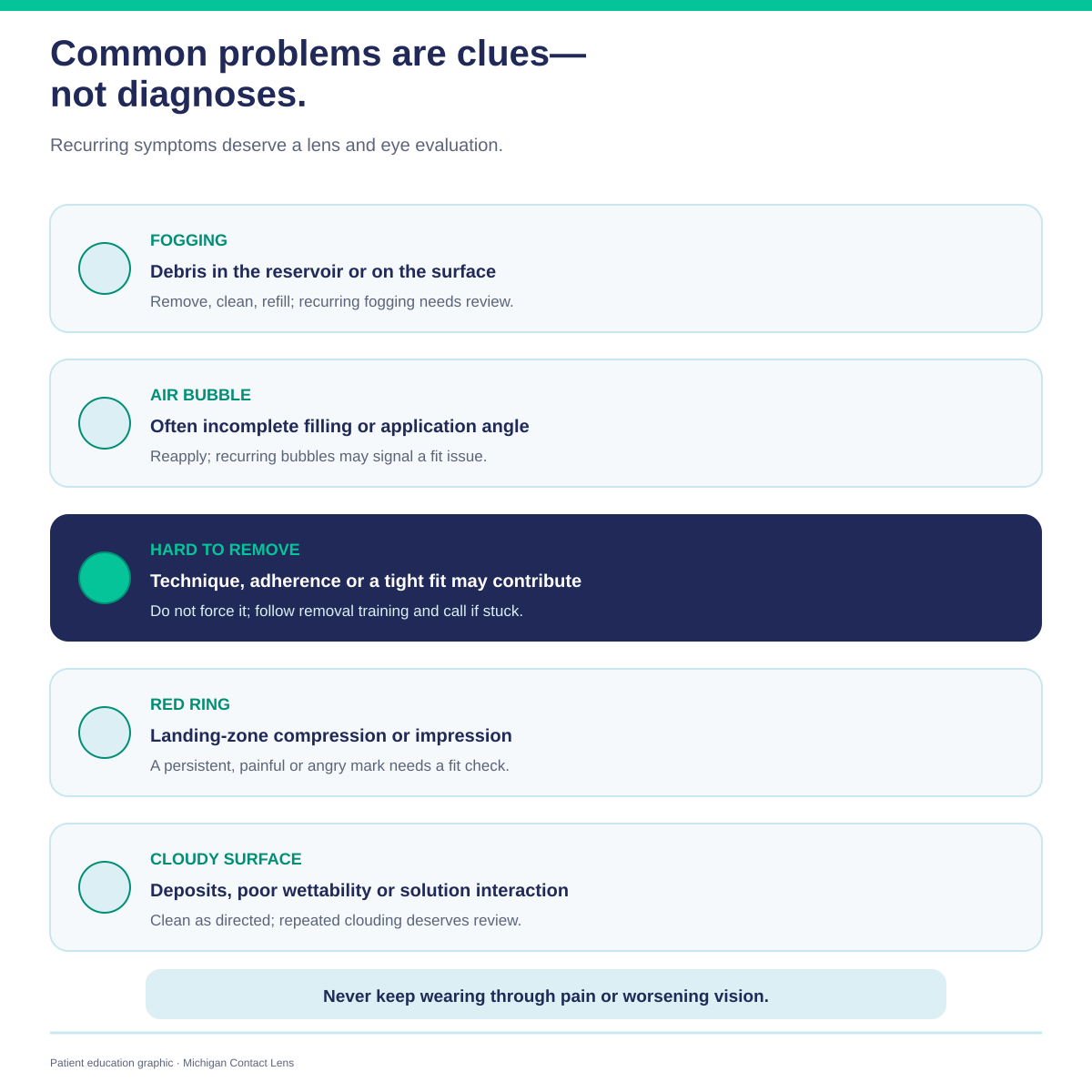
Do Scleral Lenses Hurt? Comfort And Adapting | MCL
A correctly fitted scleral lens should not hurt. What adaptation actually feels like, what discomfort usually turns out to be, and when to call.
Ready to see clearly again?
Michigan Contact Lens fits scleral and specialty lenses for keratoconus, irregular corneas, corneal transplants, and severe dry eye.