
Do Scleral Lenses Hurt? Comfort and Adapting
It’s the question almost everyone asks first: will these large lenses actually be comfortable? The reassuring answer is that most people find scleral lenses surprisingly easy to wear — often more comfortable than the smaller rigid lenses they may have tried before. Here’s what to expect as you adapt.
Do scleral lenses hurt?
Taking the blunt version of the question first, because it is the one people actually mean.
A correctly fitted scleral lens should not hurt. Not on day one, not on day thirty. What you may feel early on is awareness — a sense that something is there, a slight fullness, occasionally some watering. That fades, usually within days.
Pain is different, and it is information. Sharp pain, burning, stinging or a gritty scratching sensation is not part of adapting and should not be pushed through. It means something needs checking: a lens edge landing badly, debris trapped underneath, a surface problem, or a solution that does not agree with your eye. All of those are fixable, and none of them improves by waiting.
The single most useful thing to know as a new wearer: discomfort that is improving is adaptation. Discomfort that is constant or worsening is a fit problem. That one distinction tells you when to call.
Why they are usually more comfortable than smaller lenses
This surprises people who tried rigid corneal lenses years ago and gave up.
The cornea is the most densely innervated tissue in the body. A corneal RGP sits directly on it and moves with every blink, which is exactly why it is felt. A scleral lens does the opposite — it vaults the cornea entirely and lands on the conjunctiva over the sclera, which has far fewer nerve endings, and it barely moves once settled.
So a bigger lens is generally the more comfortable one, which is counter-intuitive until you know where each sits. If a previous rigid lens fitting is the reason you assume contacts are not for you, that experience is not predictive of this one.
What discomfort usually turns out to be
When a scleral lens is uncomfortable, it is usually one of a short list, and most are straightforward to resolve:
- Air bubble under the lens. Underfilling, or inserting at an angle. Feels like a dry patch or a moving shadow. Remove, refill to a dome, reinsert — see air bubbles in scleral lenses.
- Debris trapped underneath. Usually felt as grittiness soon after insertion. Same fix: out, rinse, refill.
- Edge landing unevenly. Felt as a localised pinch or a persistent awareness in one spot, often worse later in the day. This is a design issue and needs a refinement, not a technique change.
- Solution sensitivity. Stinging on insertion that settles after a few minutes points at what is in the bowl rather than at the lens. Switching to a different preservative-free saline often resolves it.
- A dry front surface. The lens itself drying out, which shows as vision that hazes and eyes that feel tired. Different problem from the reservoir, and treated differently.
- An underlying surface problem. Blepharitis or meibomian gland dysfunction will make any lens uncomfortable. Treating the lids sometimes does more for comfort than changing the lens.
Note how few of those are about you doing something wrong. Most are the lens or the surface, which is why “try harder” is bad advice and a phone call is good advice.
Why a poorly fitting lens is not a reason to stop
Most people who abandoned specialty lenses were fitted from a standard trial set. The white of the eye is not spherical and is asymmetric on almost everyone, so a lens selected from a tray lands unevenly — digging in on one edge, lifting on the other. That is felt, and it is felt all day.
A lens designed from a three-dimensional map of your own eye is a genuinely different object, which is the principle behind profilometry-designed scleral lenses. A previous uncomfortable fitting says something about that lens, not about your eyes.
Why scleral lenses are often comfortable
Comfort comes down to where the lens sits. A scleral lens vaults completely over your sensitive cornea and rests on the white of the eye, which has far fewer nerve endings. Underneath, a reservoir of saline cushions the cornea all day. Because the lens barely moves when you blink, there’s little of the edge-awareness that smaller corneal lenses can cause. You can read more on our scleral lenses page.
What the first day feels like
Most people notice the lens is “there” at first — a sense of fullness or mild awareness rather than pain. Your eyes may water a little as they get used to the sensation. This is completely normal and usually fades within hours to a few days. Sharp pain or burning is not normal and means the lens should come out.
The first two weeks
Your doctor will likely have you build up wear time gradually — a few hours the first days, increasing toward all-day wear as your eyes adapt. By the end of the first week or two, the majority of patients report they barely feel the lenses at all. Eyes that are very dry or have complex surfaces sometimes take a little longer, which is expected.
Tips for comfortable wear
- Fill the lens completely with fresh preservative-free saline every time — a full bowl prevents bubbles and dryness.
- Follow your gradual wear schedule rather than jumping to all-day wear immediately.
- If vision fogs midday, remove, rinse, refill, and reinsert — see how to insert and remove scleral lenses .
- Stick to your cleaning routine; a clean lens is a comfortable lens. See scleral lens care .
What’s not normal
Adaptation discomfort is mild and improving. Persistent pain, significant redness, light sensitivity, or vision that won’t clear are signs to remove the lens and call us. These usually point to a fit detail we can adjust — not a reason to give up.
If they never feel right
Comfort that doesn’t improve almost always means the lens needs fine-tuning, and refinements are a normal part of the process. The goal is a lens that disappears on your eye. If you’re still deciding whether sclerals are for you, start with who is a good candidate for scleral lenses.
Curious whether scleral lenses would feel right for you?
Dr. Shira Kresch offers complimentary specialty consultations at Michigan Contact Lens in Southfield, serving patients across Metro Detroit. We’ll map your corneas and tell you honestly whether scleral lenses are right for you.
Comfort questions we get asked
- Do scleral lenses hurt?
A correctly fitted scleral lens should not hurt. Early on you may be aware of it — a sense of fullness, maybe some watering — and that fades, usually within days. Sharp pain, burning or grittiness is not part of adapting. The useful rule is that discomfort which is improving is adaptation, and discomfort which is constant or worsening is a fit problem worth a phone call.
- Are scleral lenses more comfortable than regular hard lenses?
Usually yes, which surprises people. The cornea is the most densely innervated tissue in the body, and a corneal rigid lens sits directly on it and moves with every blink. A scleral vaults the cornea entirely and rests on the conjunctiva, which has far fewer nerve endings, and it barely moves once settled. A bigger lens ends up being the more comfortable one.
- How long does it take to get used to scleral lenses?
Most people are comfortable within one to two weeks, and many are barely aware of the lenses after the first few days. Very dry eyes and complex surfaces can take longer, which is expected rather than a bad sign. Your doctor will usually have you build wearing time up gradually rather than going to full days immediately.
- Why do my scleral lenses feel fine in the morning and not by evening?
That pattern usually points at the fit or the reservoir rather than at your technique. Common causes are the lens settling further into the conjunctiva through the day, the reservoir clouding with debris, or the front surface drying. All are addressable, and all need to be reported rather than tolerated — a lens that is only comfortable for half the day is not finished.
- Is it normal for my eye to water when I put the lens in?
Some watering in the first days is normal as the eye adjusts. Watering combined with stinging is a different signal and often points at the solution rather than the lens — switching preservative-free saline frequently settles it. Persistent watering beyond the first week is worth mentioning at your follow-up.
- What if they never feel comfortable?
Then the lens needs changing, not enduring. Refinement is a normal part of scleral fitting, not a sign anything has gone wrong — several adjustments is common rather than exceptional. If you were fitted elsewhere from a standard trial set, a lens designed from a map of your own eye is a genuinely different proposition.
Related reading
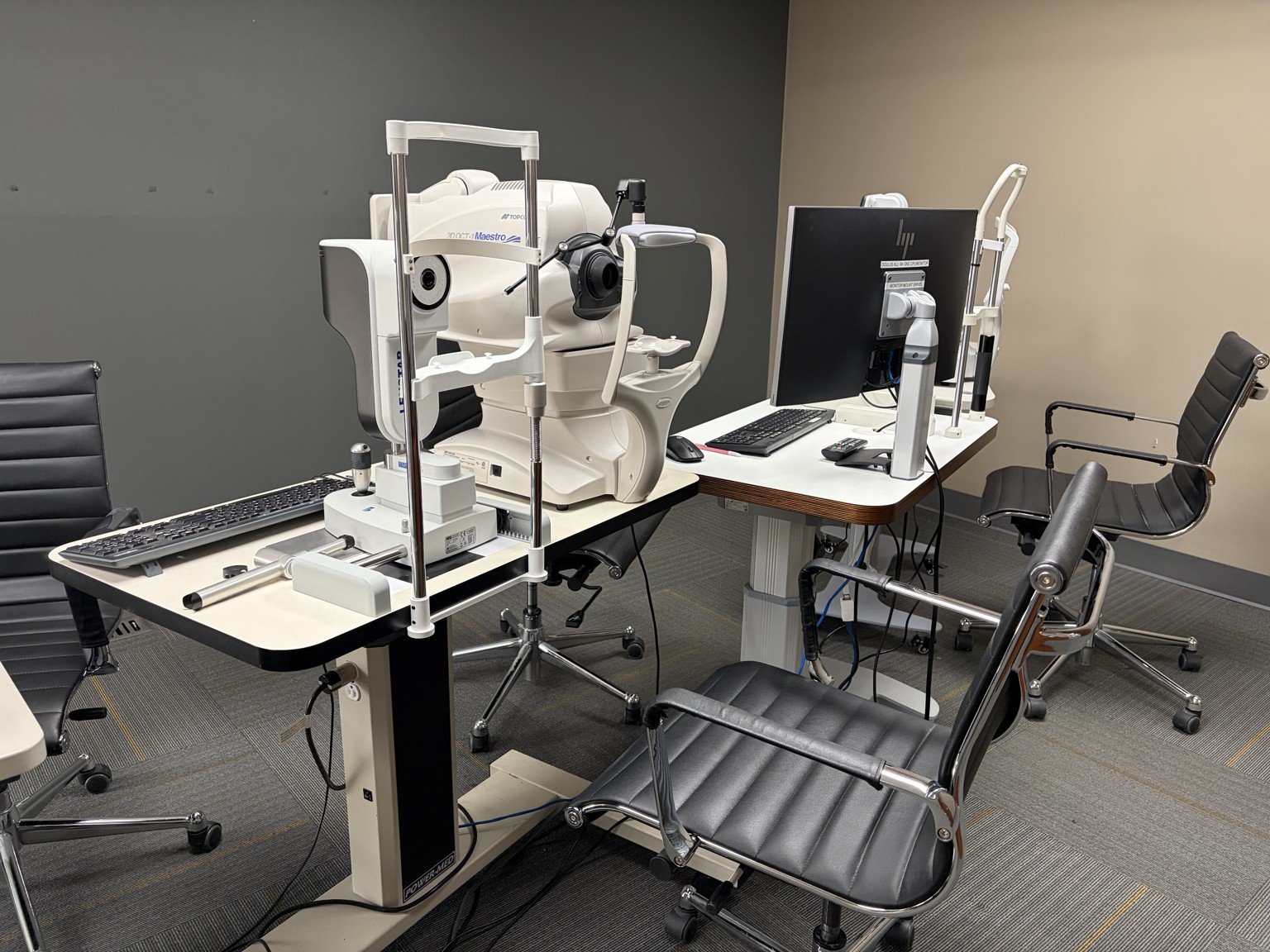
What Happens After You Refer A Patient | Michigan Contact Lens
For referring doctors: the specialty lens pathway step by step — what we do at each visit, what your patient is told, and exactly what comes back to you.

How Many Corneal Transplants Can You Have? | Michigan Contact Lens
Repeat corneal transplants are possible, but each one is a harder ask than the last. When a regraft is needed — and when a lens over the graft is the better answer.

Why Soft Lenses Fail On An Irregular Cornea | Michigan Contact Lens
A soft lens drapes over the cornea and reproduces its shape. On an irregular cornea that is the whole problem — and no amount of refitting changes it.
Finding A Scleral Lens Specialist In Metro Detroit
Looking for a scleral lens specialist near Detroit? What to look for, the conditions we treat, and how to book a free consultation in Southfield, MI.
Vision After A Corneal Transplant | Scleral Lenses
Blurry vision after a corneal transplant is normal, not a failure. Why it happens, the graft types, rejection warning signs, and how scleral lenses correct it.
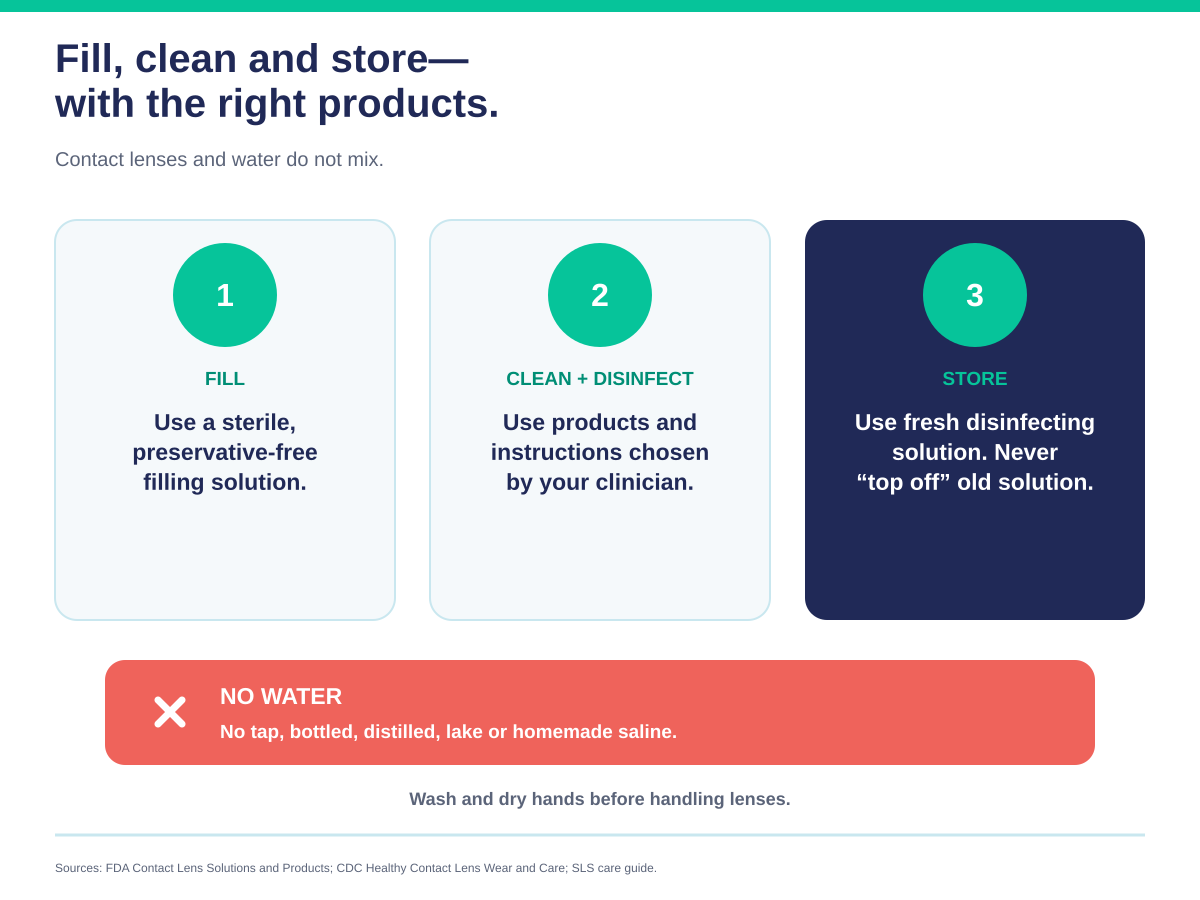
Scleral Lens Care: Solutions, Cleaning & Daily Routine
Which solutions scleral lenses actually need, the daily and weekly routine, how to care for the case, and the red flags that mean stop wearing and call us.
Ready to see clearly again?
Michigan Contact Lens fits scleral and specialty lenses for keratoconus, irregular corneas, corneal transplants, and severe dry eye.