
5 Questions to Ask Your Scleral Lens Specialist Before You Commit
Not all scleral lens fittings are equal — and the right questions reveal the difference in one consultation. Scleral lenses succeed or fail on the precision of the fitting, the technology behind the design, and what happens when the first lens isn’t perfect. Bring these questions to any consultation (including ours), and you’ll know exactly who you’re dealing with.
1. How do you measure my eye for the lens?
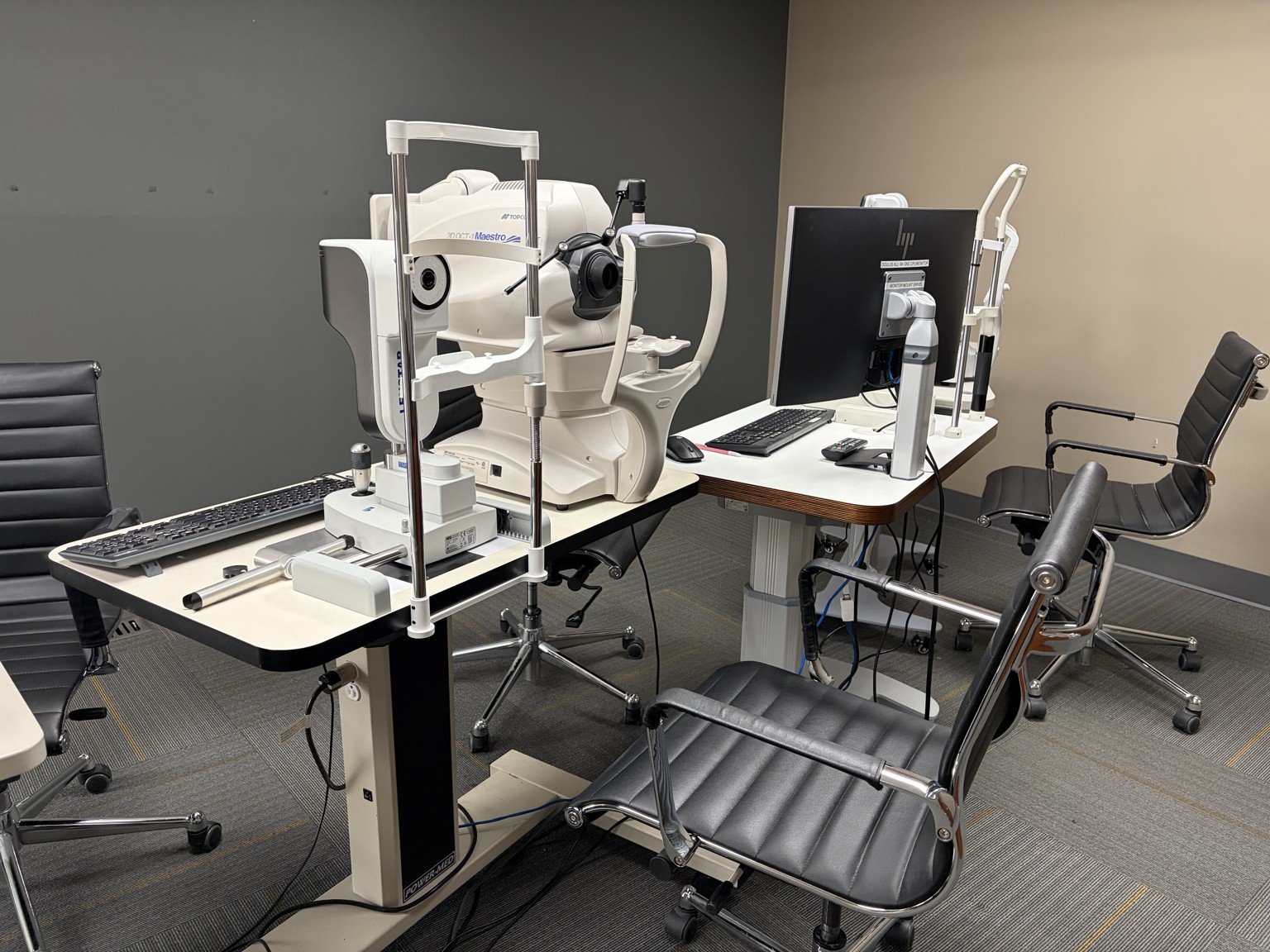
The answer you want involves mapping — not just trial lenses and guesswork. Ask whether the practice images the sclera (where the lens actually lands), not just the cornea. At Michigan Contact Lens, every lens is designed from a 3D map of the eye’s full surface captured with Eaglet Eye profilometry — technology few Michigan practices use, and the difference between a lens fit to “eyes like yours” and a lens fit to your eye.
2. How many scleral lens patients do you fit — and which conditions?
Keratoconus, post-transplant corneas, post-LASIK ectasia, and severe dry eye each fit differently. You want a practice where complex corneas are the daily work, not the occasional challenge — see the range of conditions scleral lenses treat.
3. What happens if the first lens isn’t right?
This is the question that separates practices. Complex eyes often need a refinement or two — ask whether follow-up visits and lens adjustments are built into the process, how long the refinement period lasts, and what protection you have if a comfortable fit can’t be achieved. Every fitting at MCL is backed by our Risk-Free Fit Guarantee, and the fitting process plans for refinement rather than rushing you out the door.
4. What will this cost, and how does reimbursement work?
A trustworthy practice explains the full investment up front — fitting, lenses, follow-ups — before you commit, and explains the insurance picture honestly. Ask whether they provide a superbill for out-of-network reimbursement, whether HSA/FSA and payment plans apply, and how medically-necessary documentation is handled. Our approach is on the Insurance & Payment Options page.
5. Who teaches me to handle the lenses — and what’s the support after?
Insertion and removal are learnable skills, but only if someone actually teaches you. Ask whether hands-on training is part of the fitting, what to do when a lens won’t come off or fogs midday, and how quickly you can be seen if something feels wrong. The first month is when support matters most.
Bring this list to your free consultation — we’ll answer all five, gladly. Dr. Shira Kresch fits scleral lenses for patients across Metro Detroit at our Southfield office. Book online or call (248) 545-2800.
Frequently Asked Questions
- What should I ask at a scleral lens consultation?
Ask how your eye is measured (scleral mapping vs trial-and-error), how many complex corneas the practice fits, what happens if the first lens isn’t right, the full cost and reimbursement picture, and what training and follow-up support are included.
- What technology should a scleral lens specialist have?
Corneal topography at minimum — ideally scleral profilometry, which maps the white of the eye where the lens actually lands. Profilometry-designed lenses are built to your eye’s exact geometry from the start.
- How do I know if a scleral lens fitting is going well?
Clear communication at every step: you should know the plan, the timeline, the investment, and what refinements are included. A good fit ends with a lens you stop noticing — and a practice you can reach when questions come up.
Related reading
What Happens After You Refer A Patient | Michigan Contact Lens
For referring doctors: the specialty lens pathway step by step — what we do at each visit, what your patient is told, and exactly what comes back to you.

How Many Corneal Transplants Can You Have? | Michigan Contact Lens
Repeat corneal transplants are possible, but each one is a harder ask than the last. When a regraft is needed — and when a lens over the graft is the better answer.

Why Soft Lenses Fail On An Irregular Cornea | Michigan Contact Lens
A soft lens drapes over the cornea and reproduces its shape. On an irregular cornea that is the whole problem — and no amount of refitting changes it.
Finding A Scleral Lens Specialist In Metro Detroit
Looking for a scleral lens specialist near Detroit? What to look for, the conditions we treat, and how to book a free consultation in Southfield, MI.

Vision After A Corneal Transplant | Scleral Lenses
Blurry vision after a corneal transplant is normal, not a failure. Why it happens, the graft types, rejection warning signs, and how scleral lenses correct it.

Do Scleral Lenses Hurt? Comfort And Adapting | MCL
A correctly fitted scleral lens should not hurt. What adaptation actually feels like, what discomfort usually turns out to be, and when to call.
Ready to see clearly again?
Michigan Contact Lens fits scleral and specialty lenses for keratoconus, irregular corneas, corneal transplants, and severe dry eye.