
How to Submit a Superbill for Out-of-Network Reimbursement (Step by Step)
A superbill is an itemized receipt with medical codes — and it’s how you get reimbursed for out-of-network care. You pay the practice, the practice gives you a superbill listing every diagnosis (ICD-10) and procedure (CPT) code from your visit, you submit it to your insurance company, and any reimbursement comes directly to you based on your plan’s out-of-network benefits. Here’s the whole process, step by step.
Step 1: Know your out-of-network benefits before you go
Call the member-services number on your insurance card and ask three things: Do I have out-of-network benefits for medical eye care? What is my out-of-network deductible, and how much of it have I met? What percentage does the plan pay after the deductible? Five minutes on the phone tells you what to realistically expect back.
Step 2: Get the superbill after your visit
At Michigan Contact Lens, we provide a detailed superbill after your care — it includes the practice’s information, your diagnosis codes, the procedure codes for every service performed, and what you paid. Because conditions like keratoconus and severe dry eye are medical diagnoses, the claim goes to your medical insurance, not a vision plan — a distinction that matters for specialty care like scleral lenses.
Step 3: Submit the claim
Most insurers now take out-of-network claims through their member portal or app — upload the superbill, fill in the short claim form, done. Mail remains an option (the claim form is on your insurer’s website). Submit promptly; plans have filing deadlines, often around 90 days to a year from the date of service.
Step 4: Track it and follow up
You’ll receive an Explanation of Benefits (EOB) showing what the plan allowed and what it’s sending you. If a claim is denied for a paperwork reason — a missing code, “needs medical records” — that’s usually fixable: call, ask exactly what’s needed, and resubmit. For medically necessary specialty lenses, a letter of medical necessity from your doctor often turns a denial around, and we’re glad to provide one.
Stack the rest of your options
Superbill reimbursement combines with everything else: HSA/FSA funds can pay for the care itself (specialty lens care is a qualified medical expense for most plans), CareCredit and in-house payment plans spread the investment out, and qualifying patients can use our Medicaid need-based program for up to 50% off specialty care. The full picture — including how Medicare fits in — is on our Insurance & Payment Options page and our guide to Medicare and scleral lenses.
We walk every patient through the superbill process — bring your insurance questions to your free specialty consultation and we’ll map it out together. Book online or call (248) 545-2800.
Frequently Asked Questions
- What is a superbill in medical billing?
A superbill is an itemized statement from an out-of-network provider listing diagnosis codes (ICD-10), procedure codes (CPT), provider information, and what you paid — everything your insurance company needs to process a reimbursement claim.
- How long does superbill reimbursement take?
Most plans process out-of-network claims within a few weeks to a couple of months. Submitting through your insurer’s online portal is usually faster than mail, and your EOB will show exactly what was allowed and paid.
- What if my insurance denies the superbill claim?
Many denials are paperwork issues — call and ask exactly what’s missing, then resubmit. For medically necessary specialty lens care, a letter of medical necessity from your doctor frequently reverses a denial.
Related reading
What Happens After You Refer A Patient | Michigan Contact Lens
For referring doctors: the specialty lens pathway step by step — what we do at each visit, what your patient is told, and exactly what comes back to you.

How Many Corneal Transplants Can You Have? | Michigan Contact Lens
Repeat corneal transplants are possible, but each one is a harder ask than the last. When a regraft is needed — and when a lens over the graft is the better answer.

Why Soft Lenses Fail On An Irregular Cornea | Michigan Contact Lens
A soft lens drapes over the cornea and reproduces its shape. On an irregular cornea that is the whole problem — and no amount of refitting changes it.
Finding A Scleral Lens Specialist In Metro Detroit
Looking for a scleral lens specialist near Detroit? What to look for, the conditions we treat, and how to book a free consultation in Southfield, MI.

Vision After A Corneal Transplant | Scleral Lenses
Blurry vision after a corneal transplant is normal, not a failure. Why it happens, the graft types, rejection warning signs, and how scleral lenses correct it.
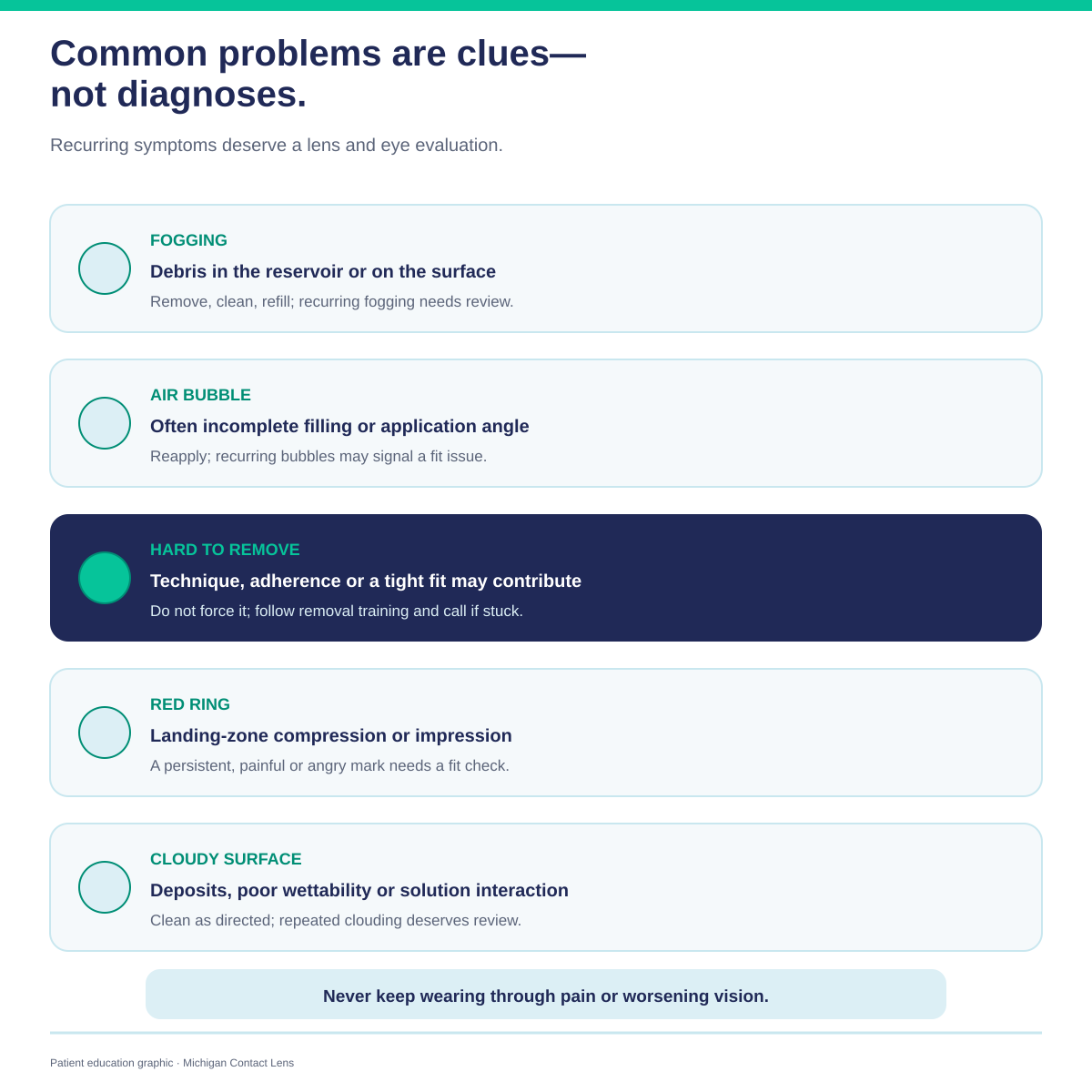
Do Scleral Lenses Hurt? Comfort And Adapting | MCL
A correctly fitted scleral lens should not hurt. What adaptation actually feels like, what discomfort usually turns out to be, and when to call.
Ready to see clearly again?
Michigan Contact Lens fits scleral and specialty lenses for keratoconus, irregular corneas, corneal transplants, and severe dry eye.