
What to Expect at a Scleral Lens Fitting
A scleral lens fitting is different from picking up a box of contacts. Because each lens is customized to your eye, the process takes a few visits and a bit of teamwork. Knowing what’s coming makes it far less intimidating — here’s exactly what to expect.
Before your appointment
If you currently wear contacts, your doctor may ask you to leave them out for a period beforehand so your corneas return to their natural shape. Bring your current glasses or lens information, a list of medications, and any records from prior eye care or surgery. If you’d like to understand whether you’re a fit before you start, read who is a good candidate for scleral lenses.
Step 1: Corneal mapping and evaluation
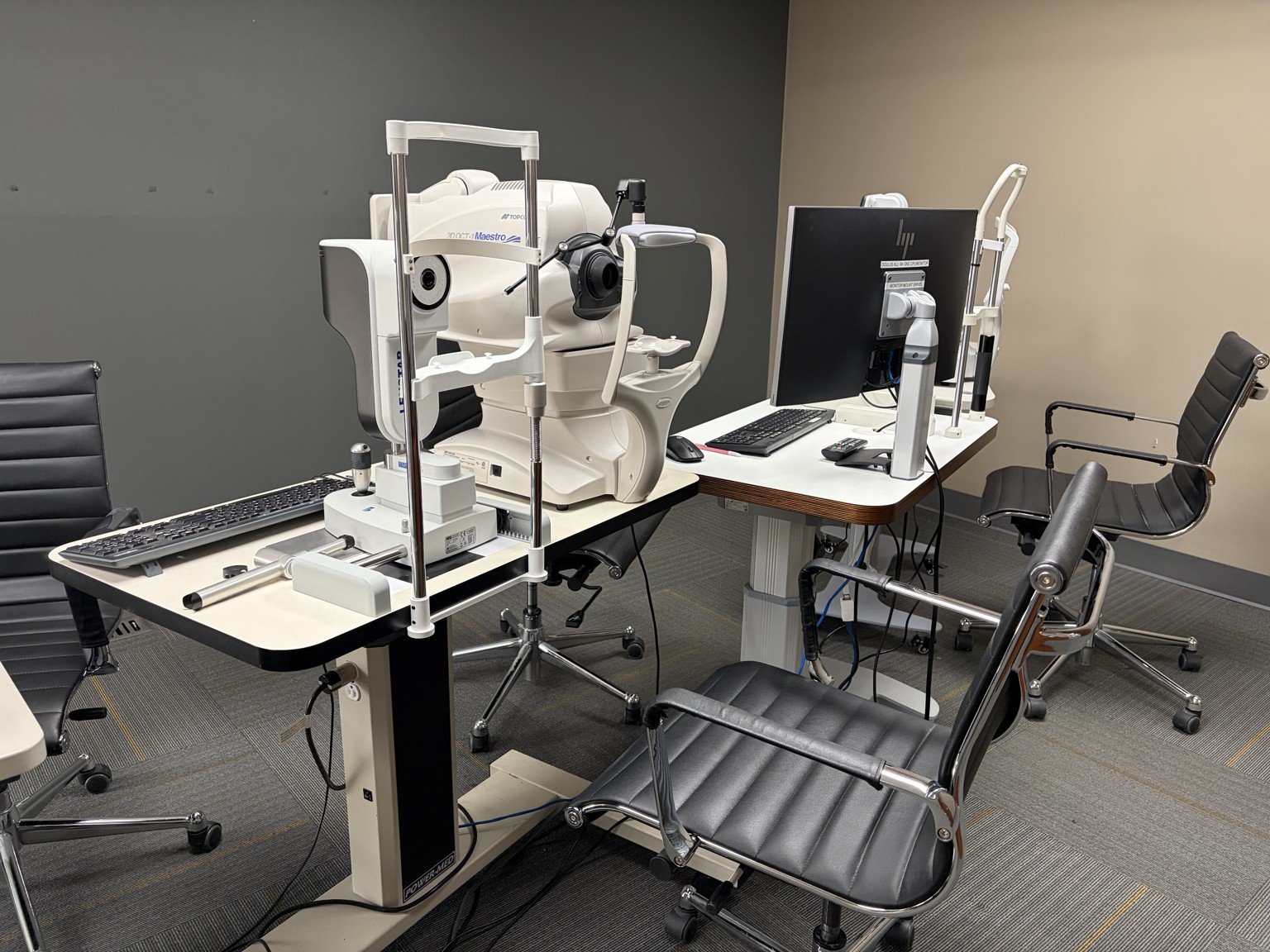
The fitting begins with a careful health check and detailed imaging of the front of your eye. Corneal topography or a scan measures the precise shape of your cornea and sclera. This map is what allows a lens to be selected and customized to vault your cornea correctly rather than press on it.
Step 2: Trial lenses and vault assessment
Using your measurements, your doctor places trial lenses on the eye and evaluates how they sit. A key goal is the right amount of “vault” — the clearance between the back of the lens and your cornea — along with how the edge lands on the sclera. Your doctor checks the fluid reservoir for the proper depth and looks for any bubbles or areas of pressure, then fine-tunes the lens parameters. You’ll also read an eye chart so the prescription can be dialed in.
Step 3: Learning to insert and remove your lenses
Handling sclerals is a learned skill, and almost everyone feels clumsy at first — that’s completely normal. Your team will teach you to fill the lens with preservative-free saline, place it without trapping an air bubble, and remove it gently at night. Most people are comfortable with the routine within a few days of practice. We’ve written a dedicated walkthrough in how to insert and remove scleral lenses.
Step 4: Follow-up visits and fine-tuning
Once your custom lenses are ordered and arrive, you’ll return to confirm the fit, comfort, and vision while wearing them. Complex eyes — keratoconus, post-transplant, or severely dry eyes — sometimes need one or more refinements to perfect the lens. This is expected and is part of getting the result right, not a sign that anything is wrong.
How long does the whole process take?
Every eye is different, but a typical fitting spans a few appointments over several weeks, including the time for custom lenses to be manufactured. Adapting to all-day wear is usually quick once the fit is right; we describe the first couple of weeks in are scleral lenses comfortable?
The goal
The point of all this care is a lens that disappears on your eye and gives you the clearest, most comfortable vision your eyes can achieve. For many patients with irregular corneas, that’s a result they hadn’t thought was still possible.
Ready to start your scleral lens fitting?
Dr. Shira Kresch offers complimentary specialty consultations at Michigan Contact Lens in Southfield, serving patients across Metro Detroit. We’ll map your corneas and tell you honestly whether scleral lenses are right for you.
Related reading
What Happens After You Refer A Patient | Michigan Contact Lens
For referring doctors: the specialty lens pathway step by step — what we do at each visit, what your patient is told, and exactly what comes back to you.

How Many Corneal Transplants Can You Have? | Michigan Contact Lens
Repeat corneal transplants are possible, but each one is a harder ask than the last. When a regraft is needed — and when a lens over the graft is the better answer.

Why Soft Lenses Fail On An Irregular Cornea | Michigan Contact Lens
A soft lens drapes over the cornea and reproduces its shape. On an irregular cornea that is the whole problem — and no amount of refitting changes it.
Finding A Scleral Lens Specialist In Metro Detroit
Looking for a scleral lens specialist near Detroit? What to look for, the conditions we treat, and how to book a free consultation in Southfield, MI.

Vision After A Corneal Transplant | Scleral Lenses
Blurry vision after a corneal transplant is normal, not a failure. Why it happens, the graft types, rejection warning signs, and how scleral lenses correct it.
Do Scleral Lenses Hurt? Comfort And Adapting | MCL
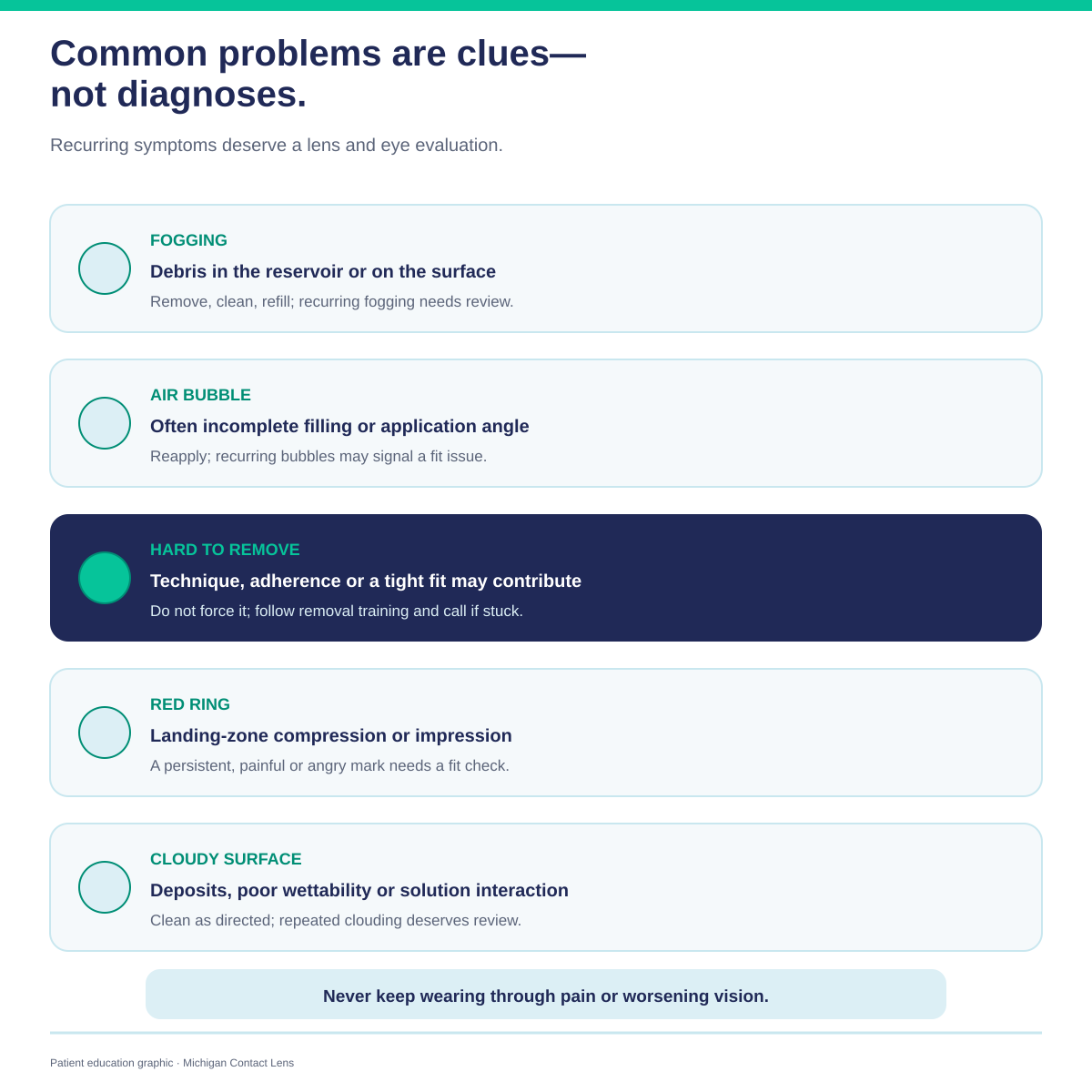
A correctly fitted scleral lens should not hurt. What adaptation actually feels like, what discomfort usually turns out to be, and when to call.
Ready to see clearly again?
Michigan Contact Lens fits scleral and specialty lenses for keratoconus, irregular corneas, corneal transplants, and severe dry eye.