
Who Is a Good Candidate for Scleral Lenses?
Scleral lenses have restored clear, comfortable vision for thousands of people who were told they were “impossible to fit” or that nothing more could be done. But they aren’t the right answer for every eye. If you’re wondering whether scleral lenses could help you, this guide walks through who tends to benefit most — and how a specialty contact lens doctor actually decides.
What are scleral lenses?
A scleral lens is a large-diameter rigid gas-permeable lens. Instead of sitting on the cornea the way a standard soft contact does, it vaults completely over the cornea and lands gently on the white of the eye, called the sclera. The gap between the lens and the cornea fills with a reservoir of sterile saline, so the front of the eye is bathed in fluid throughout the day.
That design does two important things at once: the smooth, perfectly curved front surface masks an irregular or scarred cornea, and the liquid reservoir continuously hydrates the ocular surface. You can read a fuller overview on our scleral lenses page.
Who is a good candidate for scleral lenses?
Keratoconus and other irregular corneas
This is the classic reason people are fitted in scleral lenses. In keratoconus the cornea thins and bulges into an irregular cone shape, which glasses and soft lenses cannot correct well. Because a scleral lens replaces that irregular surface with a smooth optical one, vision often improves dramatically — frequently beyond what the patient has experienced in years.
After LASIK, PRK, or RK
A small number of people develop irregular astigmatism or corneal ectasia after refractive surgery. Scleral lenses are one of the most effective non-surgical ways to sharpen vision in these eyes. We cover this in detail in scleral lenses for irregular corneas after LASIK.
Severe dry eye and ocular surface disease
Because the lens holds a pool of saline against the cornea all day, scleral lenses can be life-changing for people with severe dry eye, Sjögren’s, graft-versus-host disease, or other ocular surface conditions. For dedicated dry eye care, our sister practice at 1-800-Dry-Eyes focuses entirely on these conditions.
High or irregular astigmatism
When astigmatism is too high or too irregular for soft toric lenses to stay put and stay sharp, sclerals offer stable, crisp vision because they don’t rotate on the eye.
“Hard-to-fit” eyes that failed other lenses
If you’ve tried soft lenses or corneal gas-permeable lenses and dealt with discomfort, lenses popping out, or vision that was never quite right, sclerals are often the next step. See how they compare in scleral lenses vs. RGP gas permeable lenses.
After a corneal transplant
Transplanted corneas frequently heal with irregular astigmatism. Scleral lenses are a common way to achieve usable vision afterward — more in scleral lenses after a corneal transplant.
When scleral lenses may not be the first choice
Sclerals are remarkable, but they require commitment. They involve a custom fitting process, daily insertion and removal with a small amount of saline, and a care routine. People who have very mild prescriptions correctable with glasses or simple soft lenses usually don’t need them. Certain active eye infections or some severe ocular surface scarring may also need to be addressed first. The honest answer for any individual eye comes from an exam, not an article.
How candidacy is actually determined
Determining whether you’re a candidate starts with detailed corneal mapping and a health evaluation, followed by trial lenses to assess the fit and the vision they deliver. The whole process is collaborative and reversible — nothing is decided in a single number. We describe it step by step in what to expect at a scleral lens fitting.
The bottom line
If your vision can’t be corrected well with glasses or ordinary contacts — especially due to keratoconus, an irregular cornea, prior surgery, or severe dry eye — you are very likely worth evaluating for scleral lenses. The only way to know for certain is a specialty consultation.
Could scleral lenses work for your eyes?
Dr. Shira Kresch offers complimentary specialty consultations at Michigan Contact Lens in Southfield, serving patients across Metro Detroit. We’ll map your corneas and tell you honestly whether scleral lenses are right for you.
Related reading
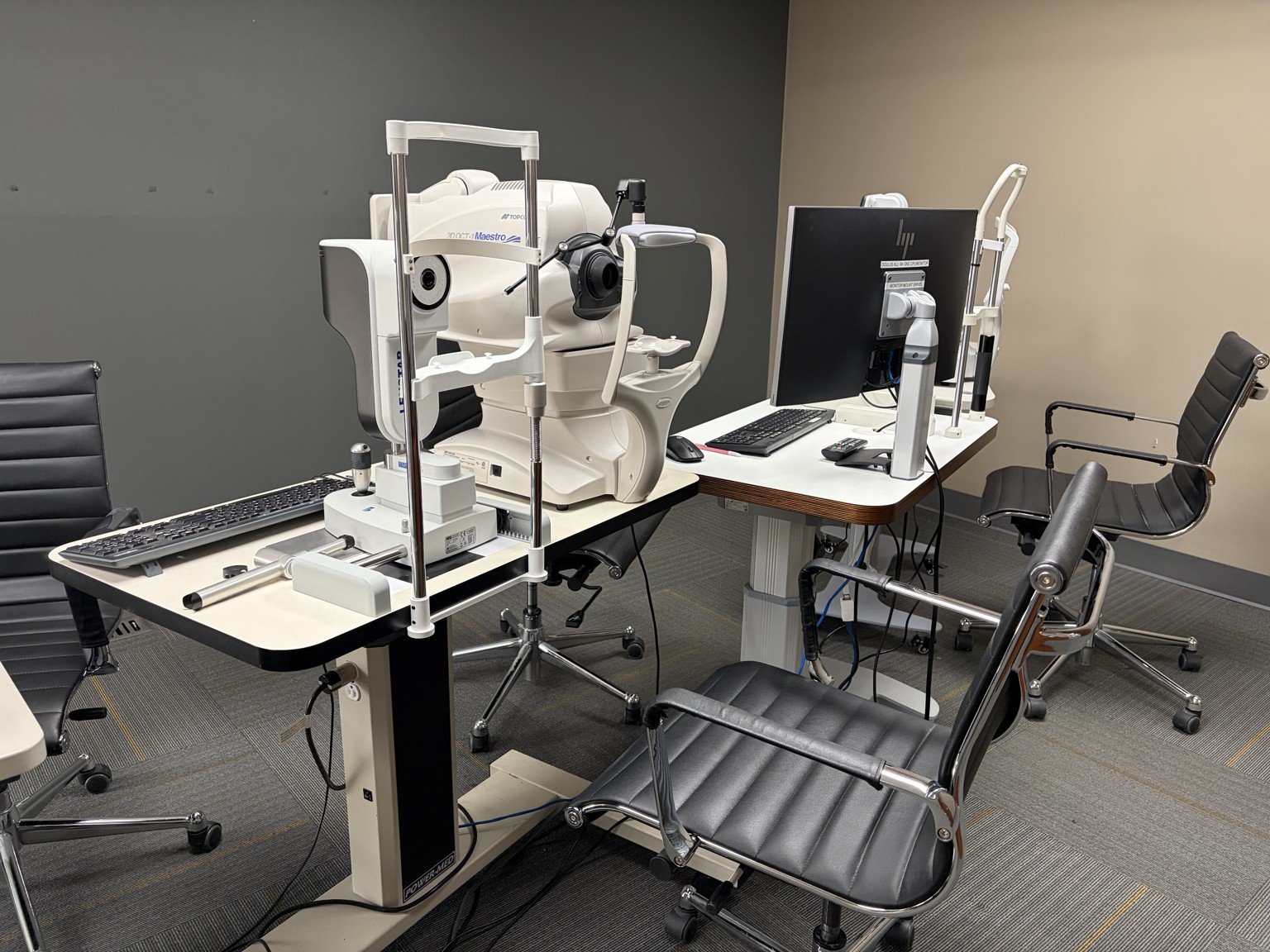
What Happens After You Refer A Patient | Michigan Contact Lens
For referring doctors: the specialty lens pathway step by step — what we do at each visit, what your patient is told, and exactly what comes back to you.

How Many Corneal Transplants Can You Have? | Michigan Contact Lens
Repeat corneal transplants are possible, but each one is a harder ask than the last. When a regraft is needed — and when a lens over the graft is the better answer.

Why Soft Lenses Fail On An Irregular Cornea | Michigan Contact Lens
A soft lens drapes over the cornea and reproduces its shape. On an irregular cornea that is the whole problem — and no amount of refitting changes it.
Finding A Scleral Lens Specialist In Metro Detroit
Looking for a scleral lens specialist near Detroit? What to look for, the conditions we treat, and how to book a free consultation in Southfield, MI.
Vision After A Corneal Transplant | Scleral Lenses
Blurry vision after a corneal transplant is normal, not a failure. Why it happens, the graft types, rejection warning signs, and how scleral lenses correct it.
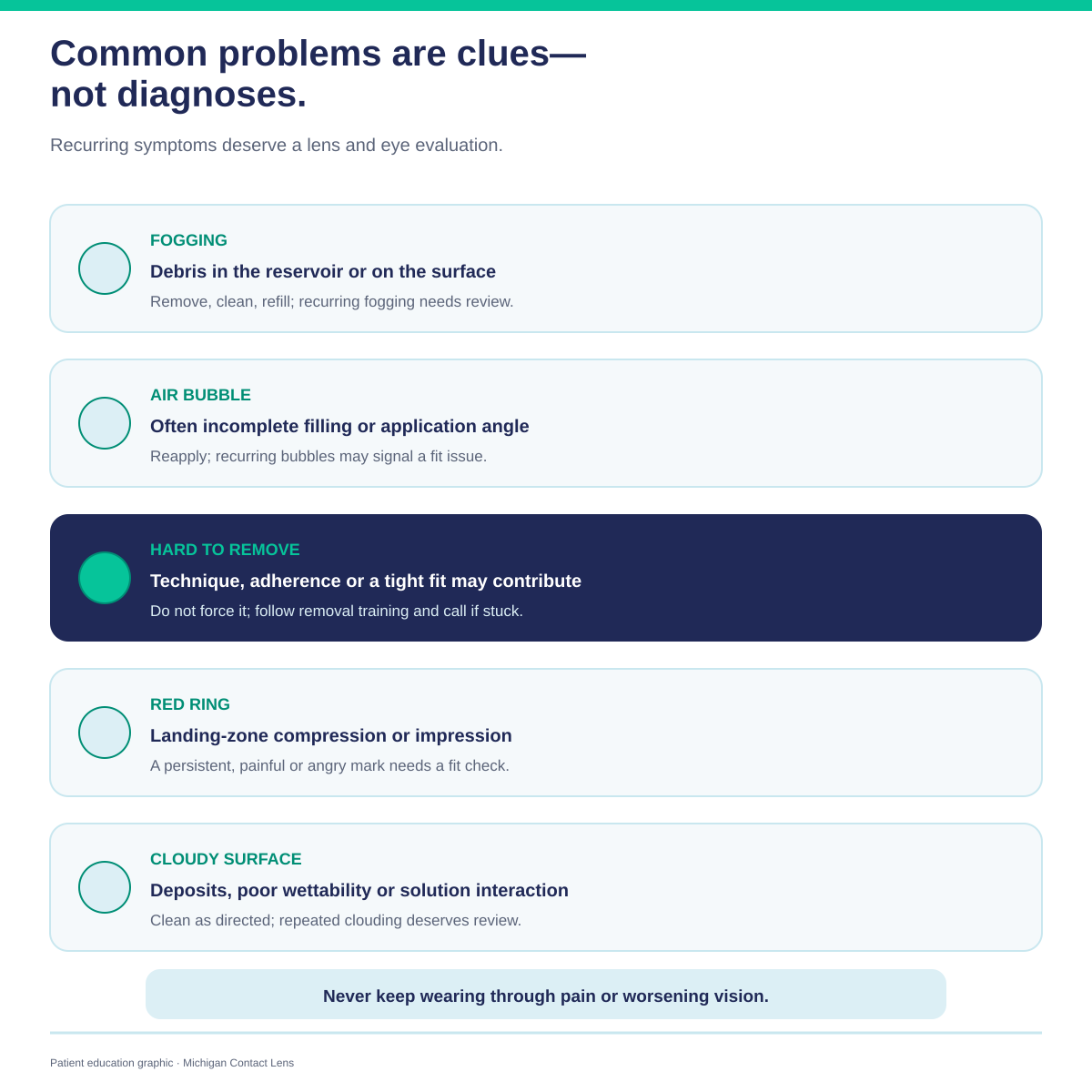
Do Scleral Lenses Hurt? Comfort And Adapting | MCL
A correctly fitted scleral lens should not hurt. What adaptation actually feels like, what discomfort usually turns out to be, and when to call.
Ready to see clearly again?
Michigan Contact Lens fits scleral and specialty lenses for keratoconus, irregular corneas, corneal transplants, and severe dry eye.