
Red Ring on Your Eye From Scleral Lenses? What It Means
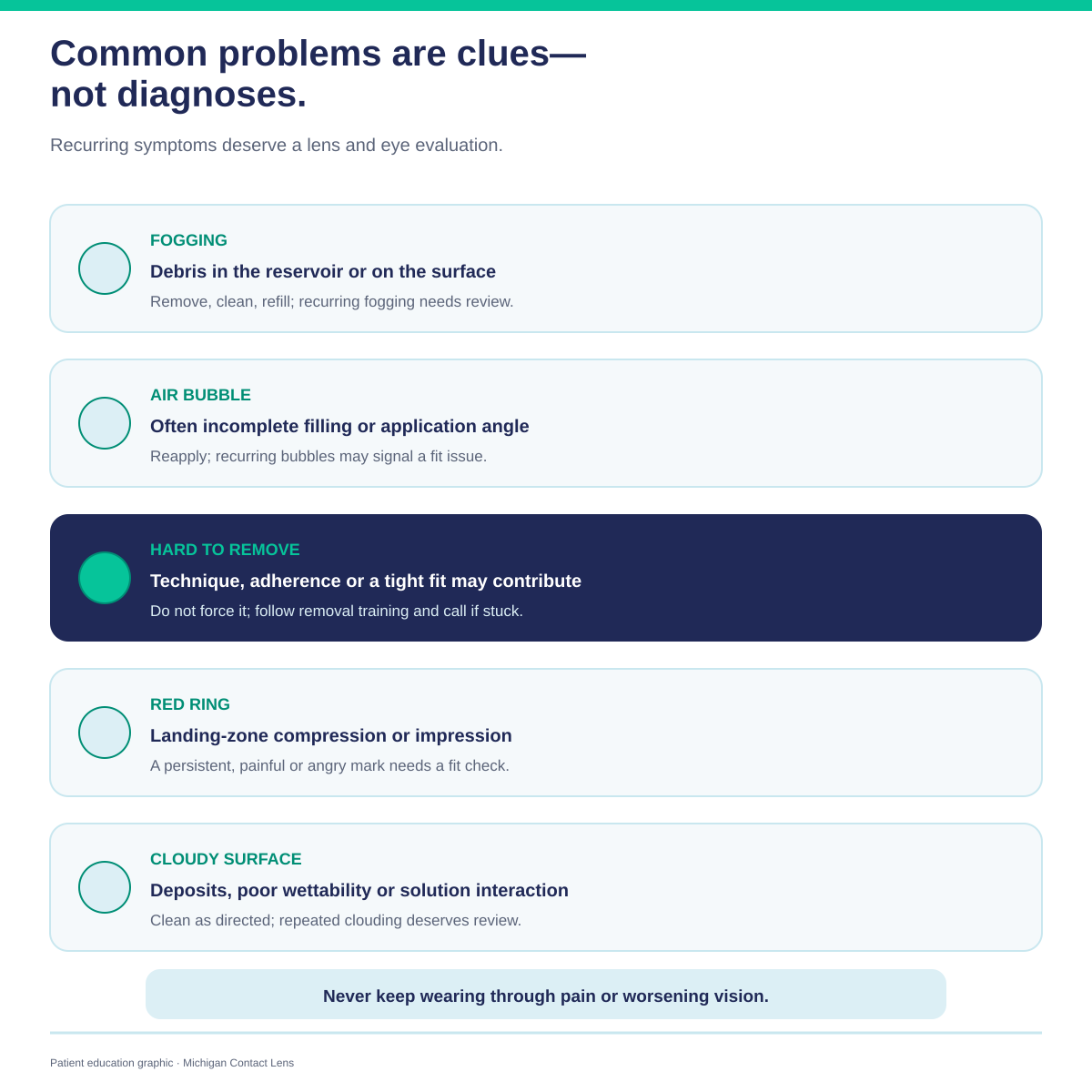
A red ring on your eye after removing a scleral lens is usually an impression ring — the temporary mark where the lens landed, like the line a sock leaves on your ankle. If it fades within an hour or so and your eye feels fine, it’s typically harmless. A ring that’s deep, painful, or still there hours later is your lens telling you the landing zone is too tight — and that’s fixable.
What the ring actually is
Scleral lenses rest on the conjunctiva — the soft, blood-vessel-rich tissue over the white of your eye. Over a day of wear, the landing zone gently compresses that tissue, and when the lens comes off you can see where it sat: a faint circular impression, sometimes with a little redness as blood flow returns. Mild impression rings are common and expected, especially as the lens settles deeper through the day.
Normal ring vs. tight ring
Usually fine: a faint ring that fades within about an hour, no pain, no change in vision, eye looks white again by bedtime. Worth a fit check: a ring that’s deeply indented or stays for several hours; redness concentrated in a band where the lens edge sits; blood vessels that look pinched or blanched while the lens is on; a lens that’s suction-tight and hard to remove by evening; or growing end-of-day discomfort. Those are signs the landing zone is gripping too hard or bearing unevenly on one spot.
Why a tight landing zone matters
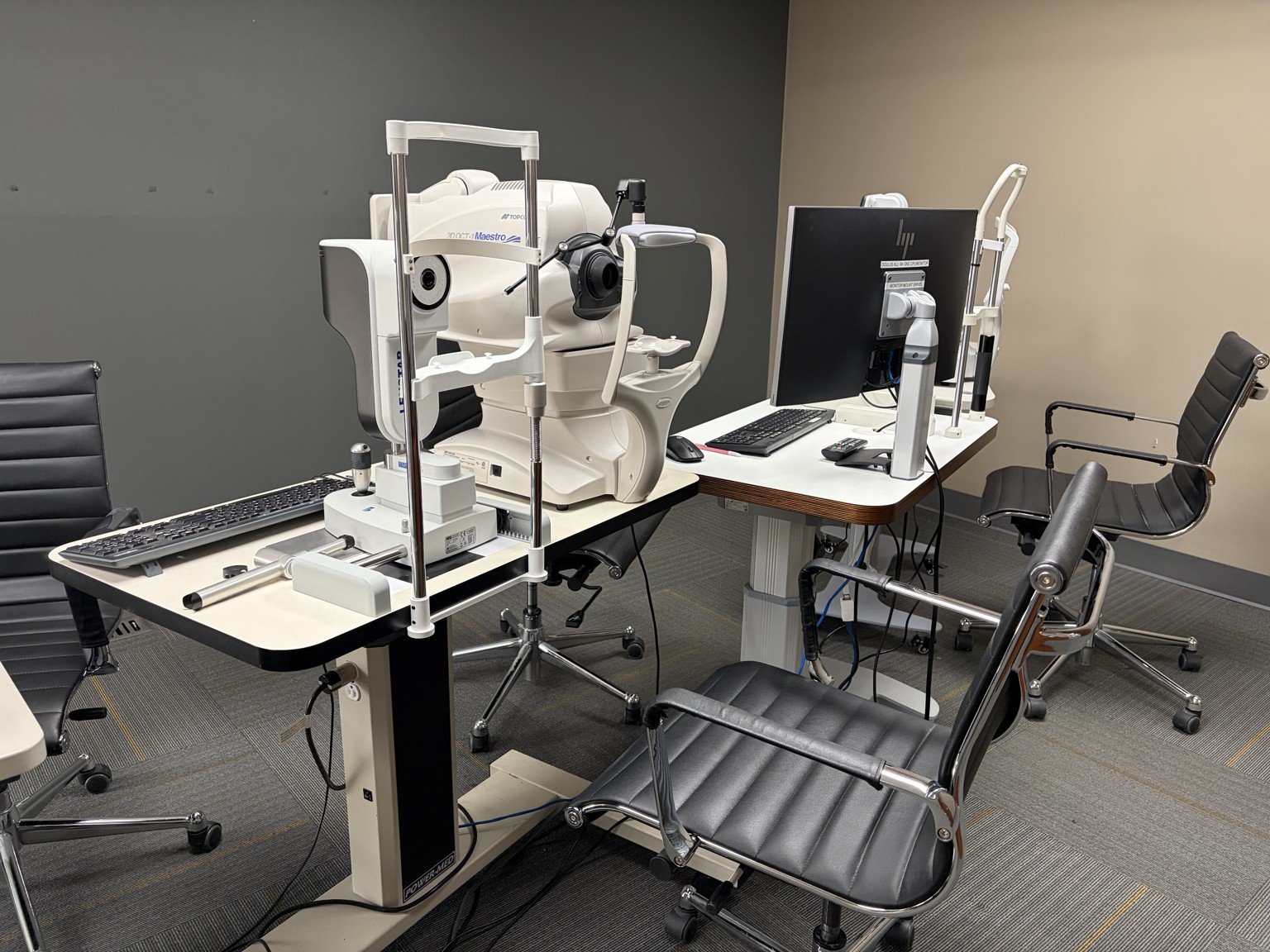
A lens that compresses the conjunctiva too much can restrict tear exchange under the lens, increase suction, and leave the eye progressively redder and more irritated as the weeks go on. The fix is a design refinement — flattening or realigning the landing zone so pressure spreads evenly. Because we design lenses from a 3D map of your eye’s surface with Eaglet Eye profilometry, we can see exactly where the bearing is heavy and adjust precisely rather than guessing.
Red eye without the ring pattern?
General redness — not a ring — points elsewhere: dryness under the lens, a reaction to solutions, debris in the reservoir, or overwear. Persistent redness with pain, light sensitivity, or blurred vision means remove the lens and call us promptly; those are the symptoms we never wait on.
A comfortable scleral lens shouldn’t leave your eye marked up. If yours does, the fit can be refined — Dr. Shira Kresch sees patients from across Metro Detroit at our Southfield office, and your first specialty consultation is free. Book online or call (248) 545-2800.
Frequently Asked Questions
- Is a red ring after wearing scleral lenses normal?
A faint impression ring that fades within about an hour is common and usually harmless — it’s where the lens landing zone rested on the conjunctiva. Deep, painful, or long-lasting rings suggest the fit is too tight.
- How do I know if my scleral lens is too tight?
Signs include an impression ring lasting several hours, blanched or pinched blood vessels at the lens edge, increasing suction and difficult removal by evening, and growing end-of-day redness or discomfort. A landing-zone adjustment fixes it.
- When should I stop wearing the lens and call my doctor?
Remove the lens and call promptly if you have eye pain, significant or worsening redness, light sensitivity, discharge, or blurred vision that doesn’t clear after cleaning and refilling the lens.
Related reading
What Happens After You Refer A Patient | Michigan Contact Lens
For referring doctors: the specialty lens pathway step by step — what we do at each visit, what your patient is told, and exactly what comes back to you.

How Many Corneal Transplants Can You Have? | Michigan Contact Lens
Repeat corneal transplants are possible, but each one is a harder ask than the last. When a regraft is needed — and when a lens over the graft is the better answer.

Why Soft Lenses Fail On An Irregular Cornea | Michigan Contact Lens
A soft lens drapes over the cornea and reproduces its shape. On an irregular cornea that is the whole problem — and no amount of refitting changes it.
Finding A Scleral Lens Specialist In Metro Detroit
Looking for a scleral lens specialist near Detroit? What to look for, the conditions we treat, and how to book a free consultation in Southfield, MI.

Vision After A Corneal Transplant | Scleral Lenses
Blurry vision after a corneal transplant is normal, not a failure. Why it happens, the graft types, rejection warning signs, and how scleral lenses correct it.
Do Scleral Lenses Hurt? Comfort And Adapting | MCL
A correctly fitted scleral lens should not hurt. What adaptation actually feels like, what discomfort usually turns out to be, and when to call.
Ready to see clearly again?
Michigan Contact Lens fits scleral and specialty lenses for keratoconus, irregular corneas, corneal transplants, and severe dry eye.