
Scleral Lens Brands: A Guide to the Options
There are many scleral lens brands and designs on the market — but here’s the most useful thing to know up front: for you as a patient, the brand matters far less than the fit. A well-designed lens fitted poorly will disappoint; a thoughtfully fitted lens from any reputable manufacturer can be life-changing. Still, it helps to understand the landscape, so here’s a plain-English guide to the options and how the right scleral lens gets chosen for your eyes.
Do scleral lens brands matter?
Scleral lenses are custom medical devices, not off-the-shelf products. Unlike soft contact lenses — where the brand determines the material and feel — a scleral lens is designed to the unique shape of your eye. Two patients wearing lenses from the “same brand” can have completely different designs. So the meaningful question usually isn’t “which brand?” but “how precisely is it fitted to my eye, and by whom?” That said, different manufacturers and design systems have strengths, and an experienced fitter chooses the platform that best matches your cornea.
The main categories of scleral lenses
Rather than memorizing brand names, it’s more useful to understand the three broad approaches to designing a scleral lens:
- Diagnostic (trial-set) designs. The fitter selects from a set of trial lenses, evaluates the fit on your eye, and refines the parameters. This is the most common approach and works well for the majority of eyes. Many established manufacturers offer these systems in various diameters and materials.
- Profilometry-designed lenses. Instead of guessing from trial lenses, the eye’s surface is captured with a precise 3D scanner (like Eaglet Eye profilometry ), and the lens is designed directly from that map. This can shorten the fitting and improve results on complex or asymmetric eyes.
- Impression-based (custom-molded) lenses. For the most irregular eyes, a mold or scan of the entire ocular surface is used to build a fully custom lens that matches every contour. These are reserved for the hardest-to-fit cases.
Materials and add-on options
Across brands, scleral lenses are made from highly oxygen-permeable rigid gas permeable materials that keep the cornea healthy during all-day wear. Beyond the base design, lenses can include add-ons like multifocal optics for presbyopia, wavefront-guided optics to reduce glare and halos, and different edge and landing-zone profiles for comfort. Which of these you need is a fitting decision, not a brand decision.
Why the fitter matters more than the brand
A scleral lens has to vault the cornea by the right amount, land evenly on the sclera without pinching, and stay clear and comfortable for 12+ hours. Getting all of that right depends on the fitter’s experience, the diagnostic technology available, and the willingness to refine until it’s right — far more than on the logo stamped on the lens case. The best practices aren’t loyal to one brand; they fit from several so they can match the design to your eye, not force your eye onto one design.
How the right lens gets chosen for you
At Michigan Contact Lens, the process starts with mapping your eye and understanding your condition and lifestyle, then selecting the design platform that fits your case — a standard diagnostic system for a straightforward eye, profilometry for a complex or asymmetric cornea, or an impression-based design for the most irregular surfaces. From there it’s trial, refine, and follow up until the lens disappears on your eye. The “brand” is just the tool; the fit is the outcome.
Wondering which scleral lens is right for your eyes? That’s exactly what a specialty fitting answers. Dr. Shira Kresch fits scleral lenses from multiple design platforms for patients across Metro Detroit at our Southfield office — your first specialty consultation is free. Book online or call (248) 545-2800.
Frequently Asked Questions
- Which scleral lens brand is best?
There’s no single ‘best’ brand — scleral lenses are custom devices designed to your eye, so the fit matters far more than the label. An experienced fitter chooses the design platform that best matches your cornea from several manufacturers.
- What are the different types of scleral lens designs?
Broadly three: diagnostic trial-set designs (most common), profilometry-designed lenses built from a 3D scan of your eye, and impression-based custom-molded lenses for the most irregular corneas.
- Does the scleral lens brand affect comfort?
Comfort comes mainly from the fit — how the lens vaults the cornea and lands on the sclera — not the brand. Material, edge design, and landing-zone profile all matter, and those are chosen during the fitting.
- How do I know I’m getting the right scleral lens?
A good fit vaults the cornea correctly, lands evenly without pinching, and stays clear and comfortable all day. That depends on the fitter’s experience and diagnostic technology far more than on which brand is used.
Related reading
Keratoconus And Down Syndrome: What The Evidence Actually Shows
Keratoconus is far more common in people with Down syndrome, but the true rate is unknown. Norway's national registry found 5.5%; a review of 20 studies found 0% to 71%. Every figure read in the cited source.

57 Keratoconus Statistics For 2026 (Every Figure Verified At Source)
57 keratoconus statistics on prevalence, risk factors, progression, cross-linking and lens outcomes — every number checked in the cited source, explained in plain language, with a link to each one.
Multifocal Scleral Lenses: Clear Vision At Every Distance
Multifocal scleral lenses correct an irregular cornea or dry eye and presbyopia at once — clear near, intermediate, and distance vision in one custom lens.
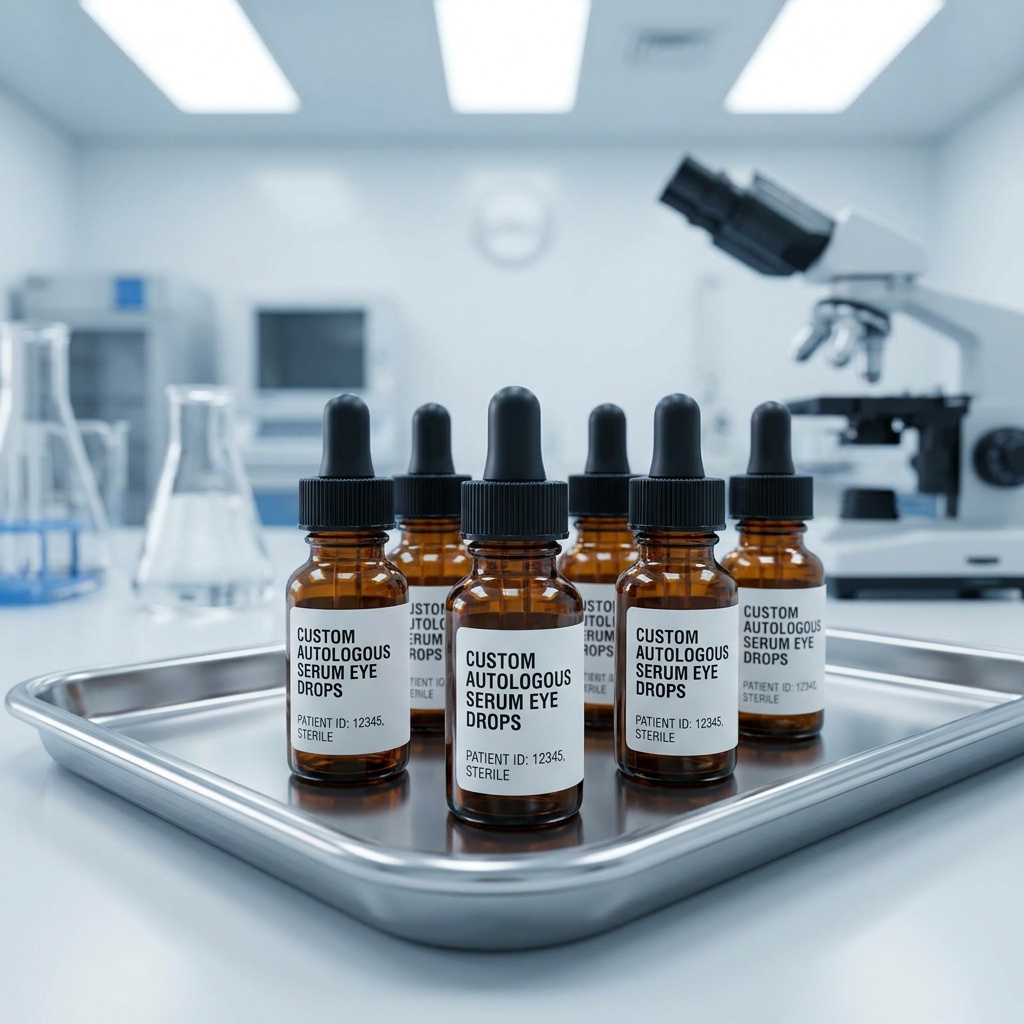
Autologous Serum Eye Drops For Severe Dry Eye
Autologous serum eye drops are made from your own blood serum for severe dry eye — Sjögren's, GVHD, neurotrophic disease.
Best Eye Drops For Sjogren's Dry Eye: A Guide
The best eye drops for Sjögren's dry eye: preservative-free tears, prescription anti-inflammatories, serum tears — and why severe cases need more than drops.
Aphakia: Causes, Symptoms & Contact Lens Options
Aphakia is the absence of the eye's natural lens, causing extreme farsightedness. Causes, symptoms, and how glasses, contact lenses
Ready to see clearly again?
Michigan Contact Lens fits scleral and specialty lenses for keratoconus, irregular corneas, corneal transplants, and severe dry eye.