
Scleral Lenses vs Corneal Transplant for Keratoconus Treatment
For patients with keratoconus, choosing between scleral lenses and corneal transplant can be challenging. Scleral lenses are often recommended as a non surgical option to improve vision and comfort, while corneal transplant is considered in more advanced cases. Understanding the differences can help you choose the right treatment.
What Is Keratoconus?
Keratoconus is a progressive eye condition where the cornea becomes thin and cone-shaped, distorting vision. It often begins in the late teens or early twenties and can worsen over time.
Common Keratoconus symptoms include:
- Blurred or double vision
- Increased sensitivity to light and glare
- Frequent changes in eyeglass prescription
- Difficulty wearing standard contact lenses
Treatment Options for the Kertoconus
When the cornea becomes too irregular for glasses or soft contacts, doctors recommend specialized keratoconus treatments such as scleral lenses or, in more severe cases, corneal transplantation.
Scleral Lenses for Keratoconus
Scleral lenses provide a stable, comfortable fit for those with keratoconus, offering clear vision by bypassing the irregularities of the cornea. Their unique design ensures both comfort and hydration for the eye throughout the day.
How Scleral Lenses Work?
Scleral lenses are large, rigid contact lenses designed to vault over the cornea and rest on the sclera (the white part of the eye).The space between the lens and cornea is filled with sterile saline, creating a smooth optical surface that corrects visual distortion while keeping the cornea hydrated.
Unlike smaller rigid lenses (RGPs), scleral lenses don’t touch the cornea directly, which makes them ideal for irregular or scarred corneas often seen in keratoconus.
Benefits of Scleral Lenses
The benefits of scleral lenses make them a reliable non surgical option for improving vision and comfort in keratoconus.
- Improved Vision Clinical data show that scleral lenses can restore vision to near 20/20 for many keratoconus patients, even in advanced stages .
- Non-Surgical and Reversible Because scleral lenses are removable, patients can discontinue wear anytime. If lenses fail to improve vision, a corneal transplant remains an option .
- Comfort and Protection The fluid reservoir cushions the cornea, reduces irritation, and protects against environmental damage and eye rubbing.
- Delay or Prevent Surgery A one-year prospective study in Contact Lens and Anterior Eye found that 77% of patients with irregular corneas were still wearing their scleral lenses at 12 months — the study measured continued wear, not whether surgery was avoided.
Considerations
- Fitting requires expertise and multiple visits .
- Cost is higher than for conventional soft lenses, because you are paying for a custom fitting process rather than a stock product.
- Daily cleaning and filling with saline are necessary.
However, with proper training and follow-up, most patients report significant visual stability and comfort over years of use.
Corneal Transplant for Keratoconus
A corneal transplant for keratoconus is typically considered when other options, like scleral lenses, no longer provide sufficient vision improvement. This procedure offers the potential for long-term vision restoration, especially in severe cases.
How a Corneal Transplant Works?
A corneal transplant (keratoplasty) replaces damaged or scarred corneal tissue with a healthy donor cornea. It’s usually recommended for patients whose vision cannot be corrected with contact lenses due to severe scarring or thinning.
There are two main types:
- Penetrating Keratoplasty (PK): Full-thickness transplant.
- Deep Anterior Lamellar Keratoplasty (DALK): Partial transplant, preserving the inner corneal layers.
Benefits of Corneal Transplant
- Long-Term Vision Improvement: Many patients achieve 20/40 vision or better post-surgery, often with the help of corrective lenses.
- Permanent Tissue Replacement: A successful graft can last decades, providing structural and visual stability.
Considerations
- Invasive Surgery: Carries risks including infection, graft rejection — an ongoing risk for the life of the graft, and one your surgeon will quantify for your graft type — and a long recovery, commonly 6–12 months.
- Dependency on Donor Tissue: Success depends on donor quality and surgical precision.
- Post-Surgery Care: Patients may still need scleral or soft lenses for optimal vision even after surgery.
According to the American Academy of Ophthalmology, 10–20% of keratoconus patients eventually require a corneal transplant, typically after all other treatments fail.
Scleral Lenses vs Corneal Transplant
| Factor | Scleral Lenses | Corneal Transplant |
|---|---|---|
| Type of Treatment | Non-surgical, reversible | Surgical, permanent |
| Vision Improvement | 20/20 is possible for many | 20/40 or better typical |
| Invasiveness | None | High |
| Recovery Time | Days | 6–12 months |
| Risks | Minimal | Infection, rejection, scarring |
| Longevity | Replaceable lenses | Long-term graft survival (~15–20 years) |
| Cost | A one-off fitting fee; lenses are replaced only as needed | Substantially higher — surgical, facility and year-long follow-up costs |
| Suitability | Mild to severe keratoconus | Advanced or scarred keratoconus |
Long-Term Outlook and Success Rates
Living with keratoconus can feel uncertain, but modern lens technology has changed the game. Before diving into the comparison, let’s look at how long-term success rates reveal why scleral lenses are becoming the preferred solution for lasting vision stability.
Scleral Lenses Success Rate
- Average daily wear: 10–12 hours
- One-year success rate: 73% overall, 77% in irregular corneas in the largest prospective series
- Common reasons for discontinuation: Handling difficulty (35%) and discomfort (19%)
Corneal Transplant Success Rate
- Graft survival rate for keratoconus: around 90% at 5 years for first grafts, and as high as 97% for primary keratoconus grafts — long-term penetrating keratoplasty survival data. The often-quoted Cornea Donor Study figure of 86% is not applicable here: it enrolled patients with Fuchs’ dystrophy and bullous keratopathy, not keratoconus.
- Vision stabilization: Typically achieved within 6–12 months post-surgery.
- Risk of rejection: Up to 20% , with possible need for repeat surgery.
For a great many patients a well-fitted scleral lens delays or removes the need for corneal surgery altogether — particularly when fitted before scarring develops.
Clinical Evidence Supporting Scleral Lens Success
Several peer-reviewed studies confirm the high scleral lens success rate in keratoconus:
- A 2019 prospective study (Macedo-de-Araújo et al.) found a 73% overall success rate in scleral lens wear over 12 months.
- In the irregular cornea group (which includes keratoconus), 77% of patients continued to wear successfully , with discomfort and handling issues being the main reasons.
- Other research reports visual improvement of two or more Snellen lines in over 80% of keratoconus eyes after scleral lens fitting.
These findings emphasize that scleral lenses offer long-term stability, safety, and reversibility, making them the first-line recommendation before any surgical option.
When is a Corneal Transplant Needed for Keratoconus
While scleral lenses can often delay or prevent surgery, there are situations where a corneal transplant becomesunavoidable, such as:
- Severe Corneal Scarring or Hydrops: When the tissue is too damaged for lens fitting.
- Extremely Thin or Steep Corneas: Lenses can no longer vault safely.
- Intolerance to Lens Wear: Some patients may experience persistent discomfort or handling difficulty.
In such cases, corneal transplantation can restore optical clarity. However, even after surgery, patients often return to scleral lens wear for optimal vision correction once the cornea heals.
See How Patients With Keratoconus Improved Their Quality of Life Using Scleral Lenses
Patients with keratoconusoften describe scleral lenses as life-changing due to improved clarity, reduced glare, and comfort for long wear hours.
By contrast, corneal transplant patients experience longer downtime and dependence on ongoing medical care. However, successful grafts can bring years of stability when lenses are no longer an option.
In most cases, optometrists recommend trying scleral lenses before considering a transplant, as the majority of patients achieve excellent results without surgery.
Which Option Is Right for You?
The decision depends on disease severity, corneal condition, and lifestyle factors:
- Choose Scleral Lenses If
- Your cornea is irregular but not severely scarred.
- You want a non-surgical , reversible option.
- You value comfort and hydration during wear.
- Consider Corneal Transplant
- Vision cannot be corrected with scleral lenses.
- Scarring or thinning prevents safe lens fitting.
- You experience repeated lens intolerance.
In short: try scleral lenses first. They are safe, effective, and can postpone or completely prevent the need for corneal surgery in many keratoconus cases.
Book an Appointment
Take the first step towards clearer vision. Book an appointment with our expertsto discuss scleral lenses or corneal transplant options.
Final Thoughts
When comparing scleral lenses vs corneal transplant for keratoconus, the data is clear, scleral lenses offer a high success rate, minimal risk, and improved comfort, making them the preferred first-line treatment.
Corneal transplants remain a valuable option for advanced cases, but for most patients, modern scleral lenses provide clear, stable vision without the risks of surgery.
If you are in Michigan or nearby, schedule a consultation with Dr. Shira Kresch at Michigan Contact Lens to explore whether scleral lenses are right for your keratoconus. With expert fitting and care, you may never need a corneal transplant.
Frequently Asked Questions
- Does corneal transplant cure keratoconus?
A corneal transplant can significantly improve vision for individuals with advanced keratoconus, but it doesn’t “cure” the condition. While it replaces the damaged cornea with a healthy donor cornea, ongoing eye care and follow-up are necessary to maintain vision.
- Is corneal transplant permanent?
A corneal transplant can provide long-term vision improvement, but it is not always permanent. The transplanted cornea can be rejected or damaged over time, and some patients may require additional treatments or another transplant in the future.
- When to get a corneal transplant for keratoconus?
A corneal transplant for keratoconus is typically recommended when other treatments, such as scleral lenses, can no longer correct vision due to severe corneal scarring or thinning. It’s often considered when the condition significantly impacts daily life and other options are ineffective.
- What are Alternatives to corneal transplant for advanced keratoconus?
For advanced keratoconus, alternatives to corneal transplant include scleral lenses for keratoconus, which provide clear, stable vision by creating a smooth optical surface over the irregular cornea. Other options include corneal cross-linking to halt the progression of the disease and Intacs (corneal implants) to reshape the cornea.
- Cost of scleral lenses for keratoconus?
There is no single price. A scleral lens is a fitting process, so the figure depends on your corneal shape, the lens design and how many refinement visits the fit takes. Michigan Contact Lens is out-of-network by choice; we provide a superbill you can submit for out-of-network reimbursement, and we accept HSA/FSA, CareCredit and in-house payment plans. See what drives the cost.
- How much are scleral lenses for keratoconus?
It varies with your eyes rather than following a set price. The fitting fee covers diagnostic imaging, custom lens design, refinement visits and follow-up care. Your specialty consultation is complimentary, and you will leave knowing exactly what your own fitting would involve — see how scleral lens cost is determined.
- What are scleral contact lenses?
Scleral contact lenses are large, rigid lenses designed to vault over the cornea and rest on the sclera (the white part of the eye). They are ideal for people with keratoconus or other corneal irregularities, as they create a smooth optical surface for clear vision without touching the cornea.
- How do scleral contact lenses help with keratoconus?
Scleral contact lenses provide excellent vision correction for those with keratoconus by creating a smooth surface over the irregular cornea. These lenses are large and rigid, offering stability, comfort, and clearer vision without direct contact with the cornea.
- Where can I find scleral lenses for keratoconus near me?
If you’re looking for scleral lenses for keratoconus near me, many eye care professionals specialize in fitting these custom lenses. You can search for optometrists or ophthalmologists in your area who offer specialized treatments for keratoconus, including the fitting of scleral lenses.
- Can scleral lenses delay corneal transplant?
Yes, scleral lenses can help delay or even avoid the need for corneal transplant in many cases by improving vision and protecting the cornea. They are commonly used as a long term management option for keratoconus.
- Are scleral lenses better than corneal transplant?
Scleral lenses are often preferred as a first option because they are non surgical and can significantly improve vision and comfort. However, they do not replace corneal transplant in advanced cases where the cornea is severely damaged.
Related reading
Keratoconus And Down Syndrome: What The Evidence Actually Shows
Keratoconus is far more common in people with Down syndrome, but the true rate is unknown. Norway's national registry found 5.5%; a review of 20 studies found 0% to 71%. Every figure read in the cited source.

57 Keratoconus Statistics For 2026 (Every Figure Verified At Source)
57 keratoconus statistics on prevalence, risk factors, progression, cross-linking and lens outcomes — every number checked in the cited source, explained in plain language, with a link to each one.
Scleral Lens Brands: A Guide To The Options
A guide to scleral lens brands and designs — diagnostic, profilometry-designed, and custom-molded — and why the fit matters far more than the brand you choose.
Multifocal Scleral Lenses: Clear Vision At Every Distance
Multifocal scleral lenses correct an irregular cornea or dry eye and presbyopia at once — clear near, intermediate, and distance vision in one custom lens.
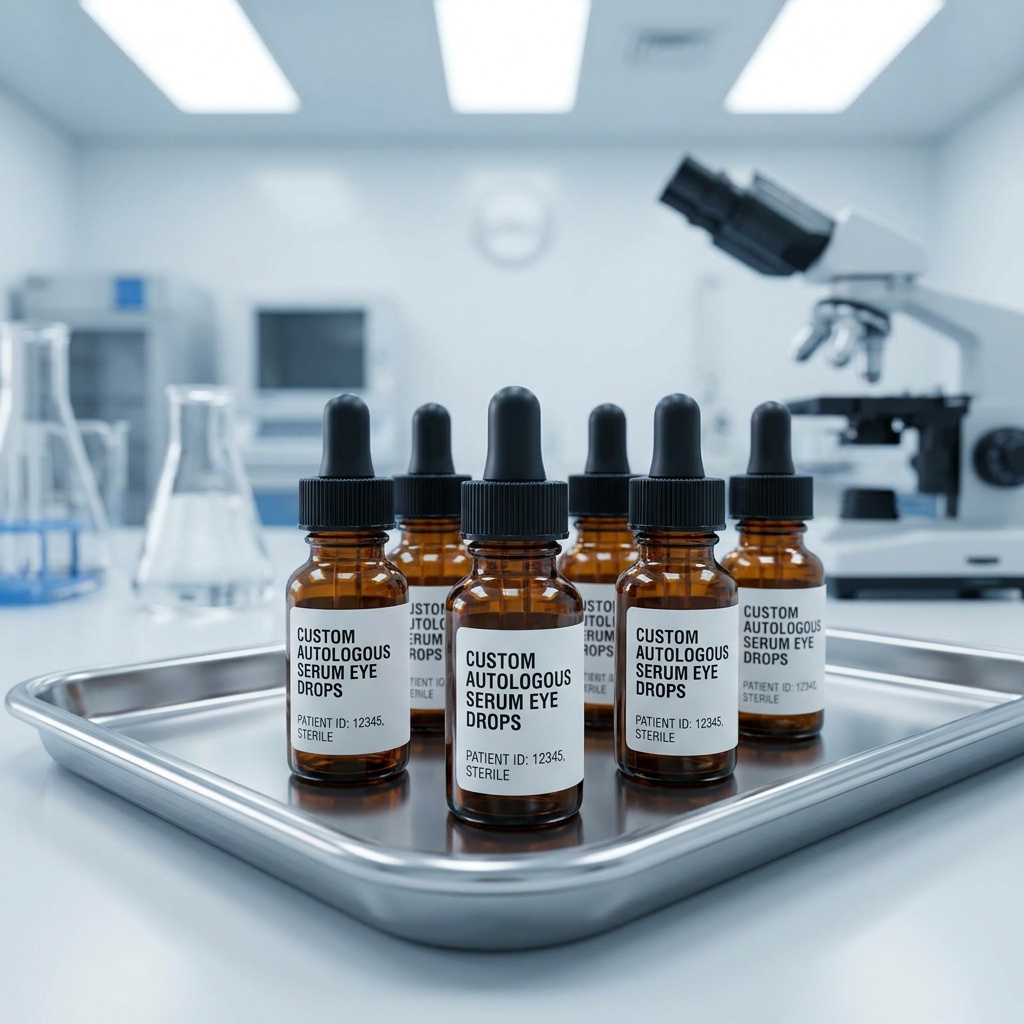
Autologous Serum Eye Drops For Severe Dry Eye
Autologous serum eye drops are made from your own blood serum for severe dry eye — Sjögren's, GVHD, neurotrophic disease.

Best Eye Drops For Sjogren's Dry Eye: A Guide
The best eye drops for Sjögren's dry eye: preservative-free tears, prescription anti-inflammatories, serum tears — and why severe cases need more than drops.
Ready to see clearly again?
Michigan Contact Lens fits scleral and specialty lenses for keratoconus, irregular corneas, corneal transplants, and severe dry eye.