
Astigmatism and Headaches: Why It Happens and How to Fix It
Yes — astigmatism can absolutely cause headaches. When astigmatism is uncorrected or undercorrected, your eyes work overtime trying to sharpen a blurry image, and that constant focusing effort fatigues the eye muscles and often triggers headaches — usually across the forehead, brow, or temples, and worse after screens or reading. The good news: once the astigmatism is accurately corrected, these headaches usually fade. Here’s why it happens and how it’s fixed.
How astigmatism leads to headaches
Astigmatism means the cornea (or lens inside the eye) is shaped more like a football than a basketball, so light focuses at more than one point instead of a single sharp point on the retina. The result is blur and distortion at all distances. Your visual system hates blur, so it fights it — the focusing muscles inside the eye contract harder, and you unconsciously squint and strain to clean up the image. Do that all day, every day, and the muscular fatigue shows up as eye strain and headaches. It’s the same reason your legs ache after standing too long: a muscle held under constant tension eventually protests.
What astigmatism headaches feel like
Headaches from uncorrected astigmatism tend to have a recognizable pattern:
- A dull ache across the forehead, brow, or temples (rather than the back of the head)
- Worse later in the day and after sustained focus
- Triggered or worsened by screens, reading, or night driving
- Accompanied by tired, burning eyes, squinting, or blurry/”pulling” vision
If that sounds familiar and you either don’t wear correction or suspect your prescription is out of date, your eyes are a very likely culprit.
Astigmatism, eye strain, and screens
Screens make astigmatism headaches worse for two reasons. First, we blink far less while staring at a screen, which dries the eye surface and adds its own irritation. Second, small on-screen text forces even harder focusing effort. Add uncorrected astigmatism on top and you have a recipe for daily tired, strained eyes and afternoon headaches. Correcting the astigmatism removes the biggest part of that load.
How astigmatism headaches are fixed
The fix is accurate correction — giving the eyes a sharp image so they stop straining. Depending on the amount and type of astigmatism, that means:
- An up-to-date glasses prescription — often the simplest first step.
- Toric soft contact lenses — designed specifically to correct astigmatism and stay oriented on the eye.
- Rigid gas permeable lenses — for higher or harder-to-correct astigmatism, where their firm surface gives especially crisp, stable vision.
- Scleral lenses — for high or irregular astigmatism that standard lenses can’t fully correct.
The key is precision. Even a small error in an astigmatism prescription — the wrong power or the wrong axis — can leave the eyes straining and the headaches lingering. That’s why a careful exam matters more here than with simple nearsightedness.
When “astigmatism” is actually something more
Sometimes astigmatism that keeps getting worse — or that glasses never quite correct — turns out to be early keratoconus, a condition where the cornea thins into an irregular cone. If your astigmatism is climbing quickly, your prescription changes often, or your vision can’t be fully sharpened with glasses, it’s worth a closer look. We explain the difference in our guide on whether astigmatism can turn into keratoconus.
When headaches aren’t coming from your eyes
Eyes are a common cause of everyday headaches, but they’re not the only one. See a doctor promptly if your headaches are severe, sudden, frequent, wake you from sleep, come with nausea, vision loss, or neurological symptoms, or don’t improve after your vision is corrected. Those patterns need medical evaluation beyond an eye exam. When in doubt, get checked — an eye exam is a smart first step, but it isn’t a substitute for care when something feels seriously wrong.
Tired of daily eye strain and headaches? A precise exam is the fastest way to find out if your astigmatism is the cause. Dr. Shira Kresch sees patients across Metro Detroit at our Southfield office — book online or call (248) 545-2800.
Frequently Asked Questions
- Can astigmatism cause headaches?
Yes. Uncorrected or undercorrected astigmatism forces the eyes to strain constantly to focus a blurry image, which fatigues the eye muscles and commonly causes headaches across the forehead, brow, or temples — often worse after screens or reading.
- Will glasses or contacts stop my astigmatism headaches?
Usually, yes. Accurate correction gives the eyes a sharp image so they stop straining, which typically resolves the headaches. The prescription’s power and axis must be precise, so an up-to-date exam is important.
- Why are my astigmatism headaches worse at the end of the day?
The focusing muscles fatigue with sustained use, so strain and headaches build as the day goes on — especially after long stretches of screen time or reading, when the eyes work hardest.
- Could my worsening astigmatism actually be keratoconus?
It can be. Astigmatism that climbs quickly, changes often, or can’t be fully corrected with glasses may be early keratoconus. A corneal evaluation can tell the difference and guide the right lenses.
Related reading
Keratoconus And Down Syndrome: What The Evidence Actually Shows
Keratoconus is far more common in people with Down syndrome, but the true rate is unknown. Norway's national registry found 5.5%; a review of 20 studies found 0% to 71%. Every figure read in the cited source.

57 Keratoconus Statistics For 2026 (Every Figure Verified At Source)
57 keratoconus statistics on prevalence, risk factors, progression, cross-linking and lens outcomes — every number checked in the cited source, explained in plain language, with a link to each one.

Scleral Lens Brands: A Guide To The Options
A guide to scleral lens brands and designs — diagnostic, profilometry-designed, and custom-molded — and why the fit matters far more than the brand you choose.
Multifocal Scleral Lenses: Clear Vision At Every Distance
Multifocal scleral lenses correct an irregular cornea or dry eye and presbyopia at once — clear near, intermediate, and distance vision in one custom lens.
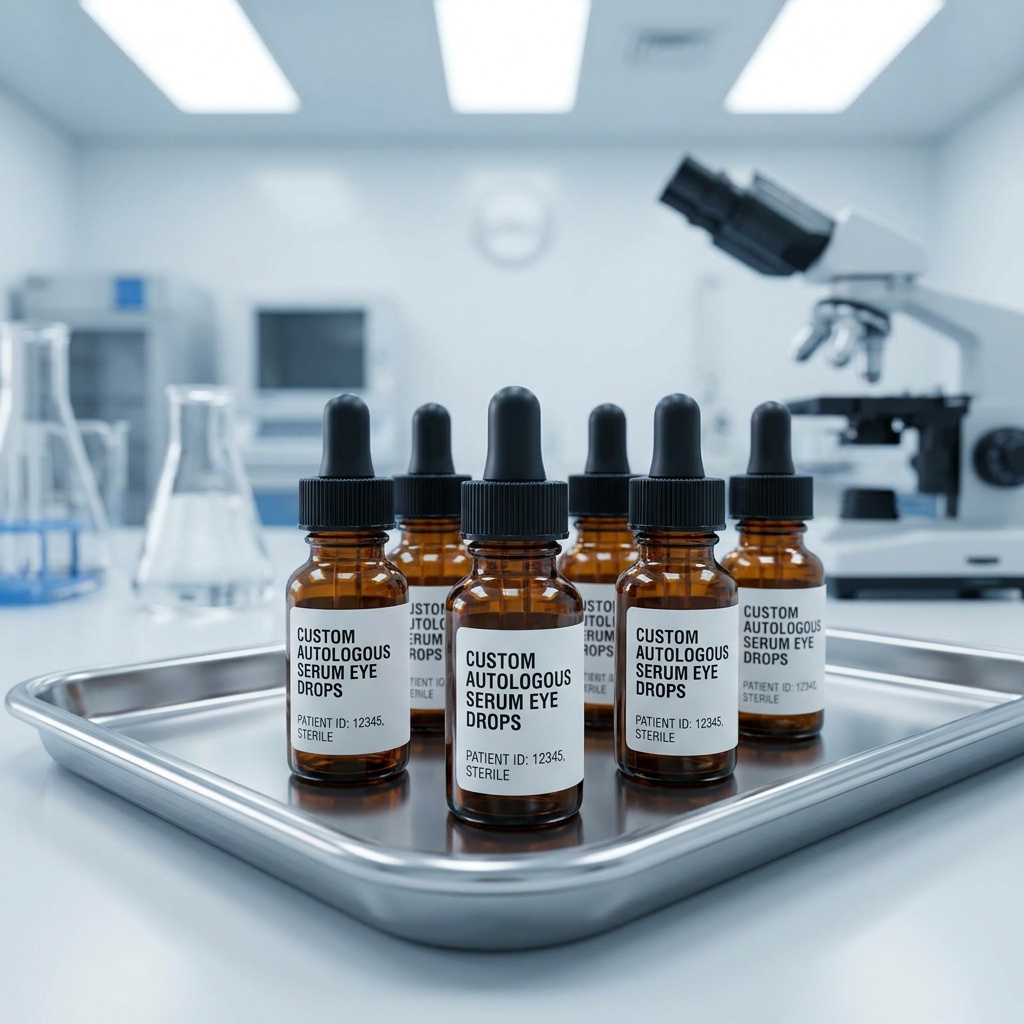
Autologous Serum Eye Drops For Severe Dry Eye
Autologous serum eye drops are made from your own blood serum for severe dry eye — Sjögren's, GVHD, neurotrophic disease.

Best Eye Drops For Sjogren's Dry Eye: A Guide
The best eye drops for Sjögren's dry eye: preservative-free tears, prescription anti-inflammatories, serum tears — and why severe cases need more than drops.
Ready to see clearly again?
Michigan Contact Lens fits scleral and specialty lenses for keratoconus, irregular corneas, corneal transplants, and severe dry eye.