
Improve Your Vision with Scleral Lenses for Irregular Astigmatism
Irregular astigmatism is a vision problem. It happens when the cornea loses its smooth shape. The cornea is the clear front part of the eye. When it becomes uneven, light scatters in all directions. This causes blurry vision, glare, and halos. Glasses and regular contact lenses often cannot fix it.
Regular astigmatism is easier to treat. Irregular astigmatism is different. It is uneven and harder to correct. It often needs special care and long-term treatment.
What Is Irregular Astigmatism?
The cornea is normally dome-shaped and smooth. In irregular astigmatism, parts of it become steep or flat. This uneven surface bends light in the wrong way. The result is distorted vision that gets worse at night or while driving.
Doctors use a corneal map to diagnose this condition. This test is called corneal topography. It shows the shape and surface of the cornea in detail. It helps doctors choose the best treatment.
Conditions that Cause Irregular Astigmatism
Irregular astigmatism has many causes. Here are the most common ones.
1. Corneal Ectatic Disorders
Keratoconus is one of the top causes. It makes the cornea thin and bulge outward. This distorts the shape and harms vision. Another condition called post-LASIK ectasia can also cause this. Treatment with corneal collagen cross-linking can slow it down.
2. Corneal Scarring and Trauma
Eye infections or injuries can leave scars on the cornea. These scars change the shape of the cornea. This creates uneven areas that bend light poorly. Standard lenses cannot fix this type of distortion.
3. Post-Surgical Changes
Some older eye surgeries left behind scars and uneven surfaces. A surgery called radial keratotomy (RK) is one example. Many patients who had this surgery now have irregular astigmatism.
4. Dry Eye Disease
Dry eye is a common but often missed cause. The tear film covers the front of the eye. It is the first layer that bends light. When it is unstable, vision becomes blurry and uneven. Treating dry eye can sometimes improve astigmatism on its own.
5. Surface Disorders
Some conditions cause small bumps or dips on the cornea. These include epithelial basement membrane dystrophy and Salzmann’s nodular degeneration. A growth called a pterygium can also flatten parts of the cornea and distort vision.
Symptoms of Irregular Astigmatism
People with irregular astigmatism notice more than just blur. Vision often changes with each blink. Light causes glare and halos. Some people see double with one eye.
The brain cannot merge the scattered light into a clear image. This leads to eye strain and headaches. It can make daily life very difficult.
Diagnosis and Assessment
Doctors start with corneal imaging. This shows the shape, surface, and thickness of the cornea. It helps find the cause and severity of the problem.
Wavefront testing is also used. It measures how well light travels through the eye. This gives doctors a full picture of the vision problem. Knowing if the condition is stable or getting worse.
Management and Treatment of Irregular Astigmatism
Treatment focuses on two things:
- fixing the cause.
- improving vision Doctors start with simple steps and move to surgery only if needed.
1. Ocular Surface Treatment
The first step is often treating dry eye. Artificial tears and warm compresses help. Anti-inflammatory drops reduce irritation. Treating the tear film first can improve vision without any lenses or surgery.
2. Contact Lens Correction
When glasses fail, contact lenses are the next step. Rigid gas-permeable (RGP) lenses and scleral lenses work best. They do not bend with the cornea. Instead, they create a smooth new surface for light to pass through.
3. Corneal Collagen Cross-Linking (CXL)
This treatment stops keratoconus from getting worse. It uses UV light and eye drops to strengthen the cornea. It does not reverse damage. But it stops the cornea from thinning further. .
4. Corneal Ring Segments
Small ring-shaped implants can be placed inside the cornea. They flatten the bulging area and improve the corneal shape. This makes scleral or RGP lenses fit better and work more effectively.
5. Surgical Options
Some cases are too severe for lenses alone. In these cases, a corneal transplant may be needed. For patients with cataracts too, special intraocular lenses can improve vision after surgery.
Scleral Lenses are a non-surgical solution
Scleral lenses are large, rigid lenses. They sit on the white part of the eye. They vault over the cornea without touching it. The space under the lens fills with saline solution.
This creates a smooth, moist surface in front of the eye. The result is clear, stable vision and all-day comfort. Many patients who failed with other lenses do well with scleral lenses.
Scleral lenses work well for:
- Keratoconus and post-LASIK ectasia
- Corneal scars and post-transplant eyes
- Eyes damaged by infection or trauma
- Dry or sensitive eyes that need constant moisture
When fitted well, scleral lenses can delay or even prevent the need for surgery.
Visual Rehabilitation and Quality of Life
The goal of treatment is clear, comfortable vision. Most patients regain normal daily function with custom scleral lenses. They can read, drive, and work without pain or strain.
Scleral lens technology keeps improving. Digital corneal mapping and 3D-printed designs now allow very precise fits. For many patients, these lenses are the difference between surgery and restored sight.
Book an appointment with Michigan Contact Lens’ expert doctors.
Conclusion
Irregular astigmatism is more than a simple vision problem. It comes from real changes in the cornea’s shape. But it can be treated. Scleral lenses, cross-linking, and corneal implants have changed the outcome for many patients.
With the right care, most people can achieve clear and stable vision. Surgery is not always needed. What was once a lasting vision problem can now often be managed well. Life quality can improve greatly with the right treatment plan.
Frequently Asked Questions
- What is irregular astigmatism?
It’s a vision problem caused by an uneven corneal surface. This irregular shape bends light unevenly, leading to blurry or distorted sight that glasses can’t correct.
- What causes irregular astigmatism?
It can result from eye surgery, corneal disease, infection, trauma, or conditions like keratoconus that change the cornea’s shape.
- How are scleral lenses different from regular contacts?
Scleral lenses rest on the white part of your eye and vault over the cornea. They create a smooth, tear-filled surface that gives clear, stable vision.
- Can scleral lenses fix irregular astigmatism?
Yes. They mask corneal irregularities and correct distorted vision. Many people see clearly again without needing surgery.
- Are scleral lenses comfortable to wear?
The lenses don’t touch the sensitive cornea and stay hydrated all day, making them easy to wear even for dry or sensitive eyes.
- When should I see a doctor for irregular astigmatism?
See an eye specialist if you have blurred vision, glare, or light sensitivity that glasses don’t fix. Early diagnosis prevents further vision loss.
- Where can I get treated for irregular astigmatism?
You can book an appointment with Michigan Contact Lens. Their expert doctors specialize in custom scleral lenses and advanced eye care for clear, comfortable vision.
Related reading
What Happens After You Refer A Patient | Michigan Contact Lens
For referring doctors: the specialty lens pathway step by step — what we do at each visit, what your patient is told, and exactly what comes back to you.

How Many Corneal Transplants Can You Have? | Michigan Contact Lens
Repeat corneal transplants are possible, but each one is a harder ask than the last. When a regraft is needed — and when a lens over the graft is the better answer.

Why Soft Lenses Fail On An Irregular Cornea | Michigan Contact Lens
A soft lens drapes over the cornea and reproduces its shape. On an irregular cornea that is the whole problem — and no amount of refitting changes it.
Finding A Scleral Lens Specialist In Metro Detroit
Looking for a scleral lens specialist near Detroit? What to look for, the conditions we treat, and how to book a free consultation in Southfield, MI.
Vision After A Corneal Transplant | Scleral Lenses
Blurry vision after a corneal transplant is normal, not a failure. Why it happens, the graft types, rejection warning signs, and how scleral lenses correct it.
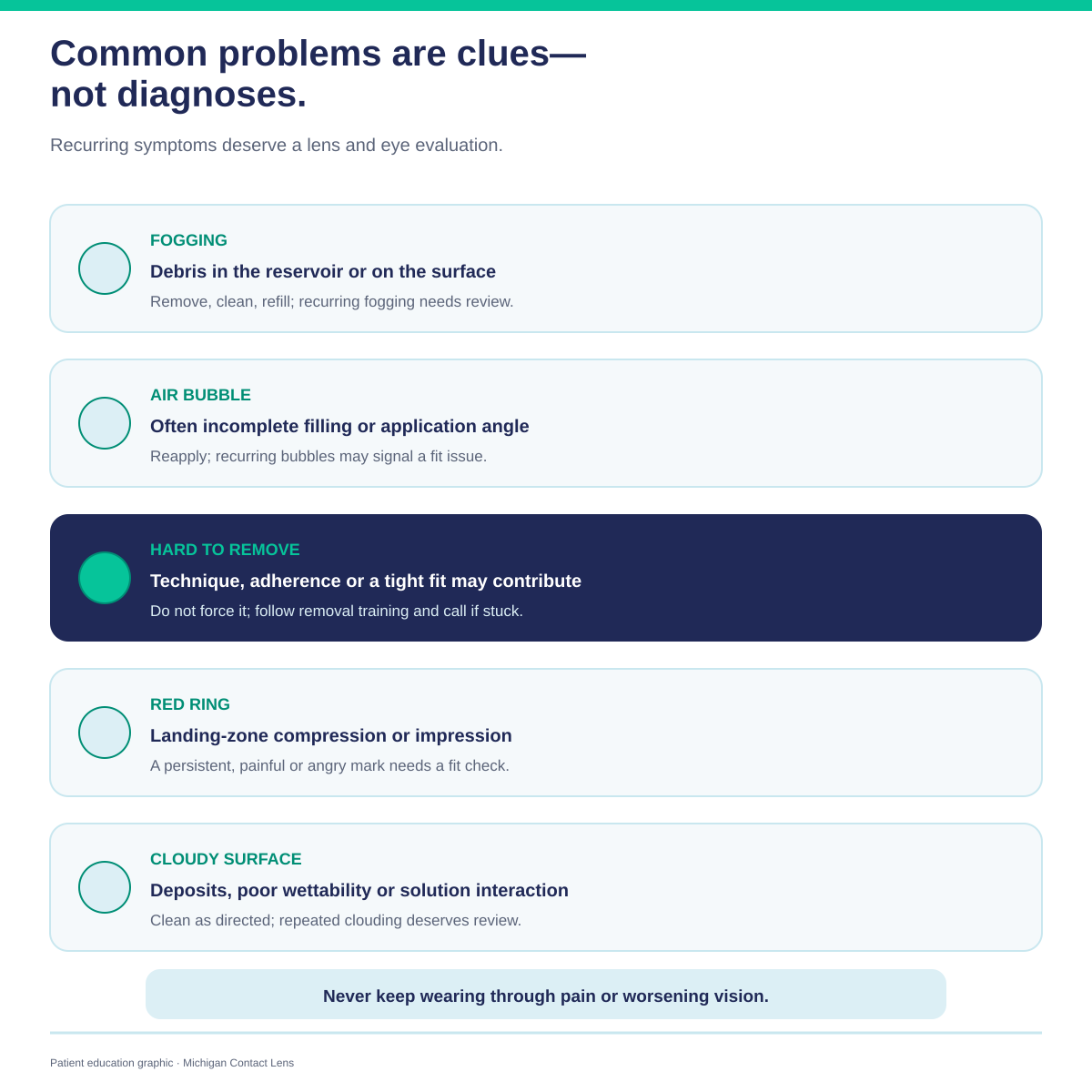
Do Scleral Lenses Hurt? Comfort And Adapting | MCL
A correctly fitted scleral lens should not hurt. What adaptation actually feels like, what discomfort usually turns out to be, and when to call.
Ready to see clearly again?
Michigan Contact Lens fits scleral and specialty lenses for keratoconus, irregular corneas, corneal transplants, and severe dry eye.