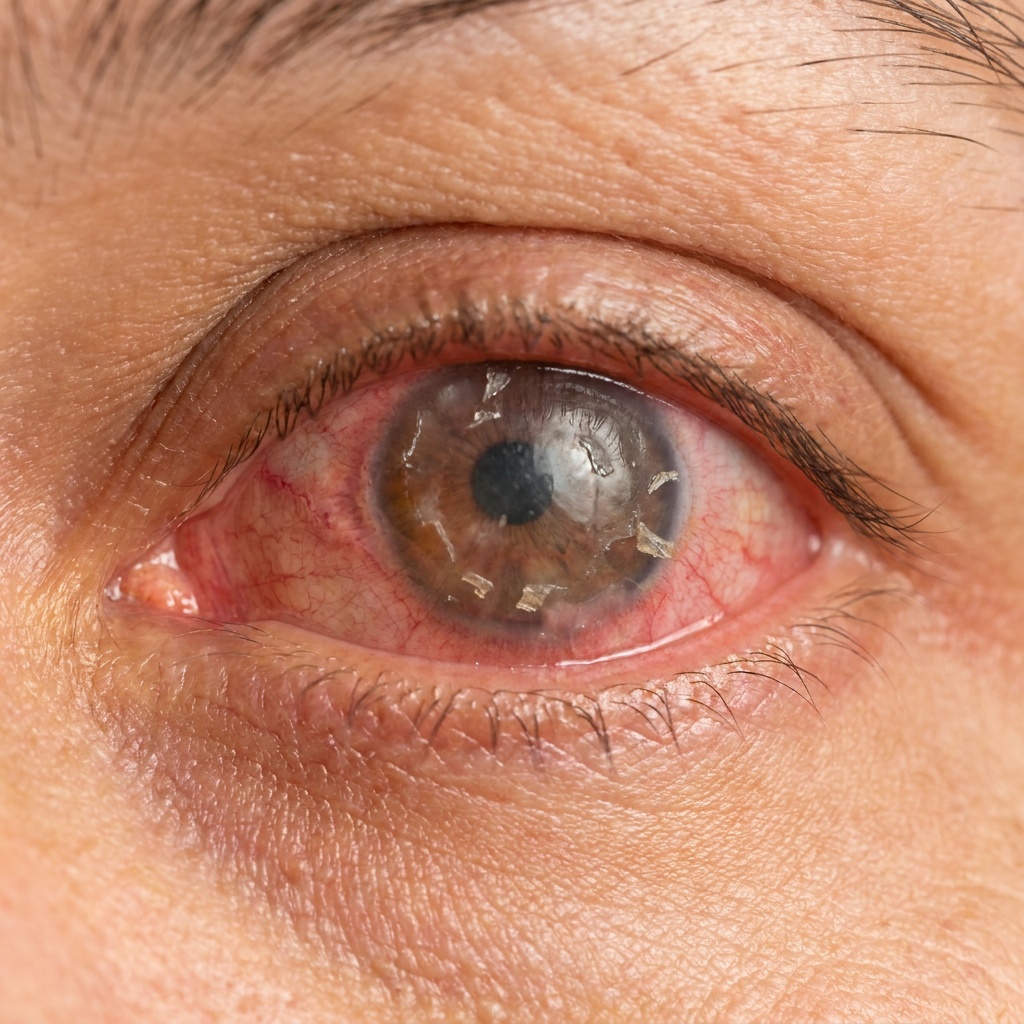
Stevens-Johnson syndrome (SJS) can leave a lasting mark on the eyes long after the initial illness has passed. Chronic dryness, scarring, and light sensitivity are common — and often severe. At Michigan Contact Lens, Dr. Shira Kresch fits therapeutic scleral lenses that bathe the ocular surface in fluid, protect it from further damage, and restore comfort and clarity for patients living with SJS.
Stevens-Johnson syndrome is a rare, serious reaction — usually to a medication or infection — that affects the skin and mucous membranes, including the delicate surface of the eyes. In its acute phase it causes blistering and inflammation, but for many patients the most lasting damage is ocular.
The syndrome can scar the conjunctiva, destroy the glands that produce tears and oils, and damage the corneal surface. The result is chronic, often debilitating dry eye and light sensitivity that standard drops and lenses can’t manage.
The ocular complications of SJS come from inflammation and scarring of the ocular surface. Common effects include:
These problems can persist and progress for years after the initial episode, which is why ongoing specialized care matters.
If you’ve had Stevens-Johnson syndrome, watch for ongoing ocular symptoms such as:
For the damaged, dry surface left by SJS, a scleral lens can be life-changing. The lens vaults over the cornea and holds a reservoir of preservative-free fluid against the eye all day.
For SJS patients, scleral lenses are widely regarded as one of the most effective tools for both comfort and vision.
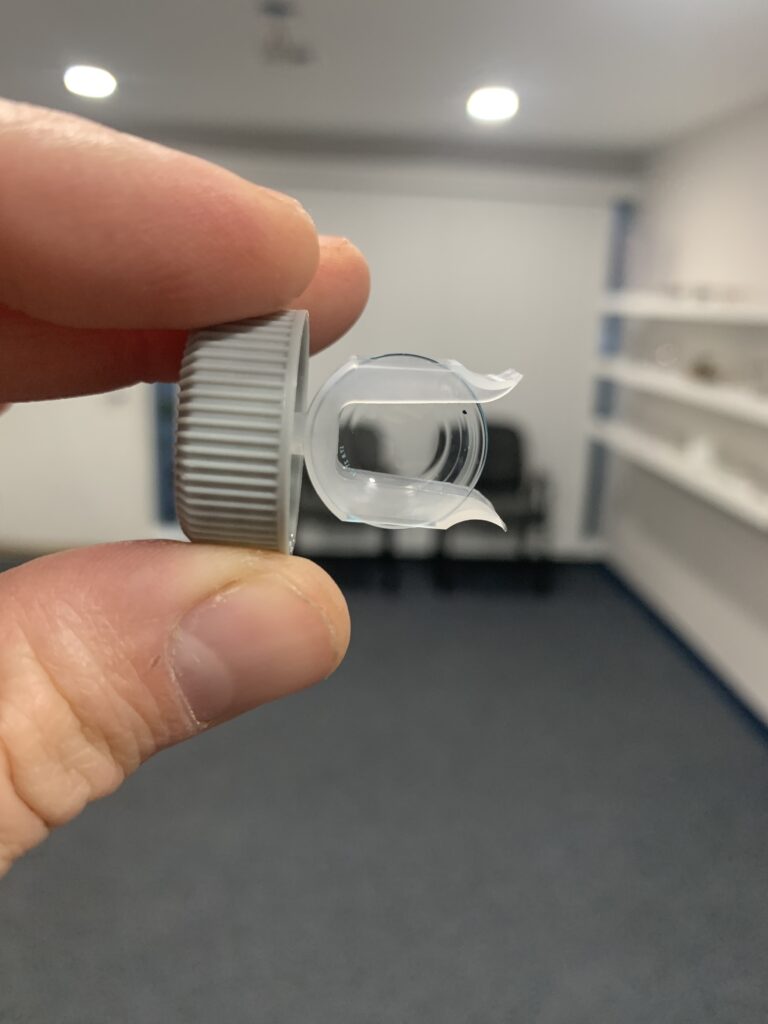
Unlike ordinary contact lenses, scleral lenses for SJS are therapeutic devices. The fluid reservoir acts like a continuous liquid bandage, protecting a compromised surface while it stays hydrated. For many patients, this is the difference between struggling through the day and returning to normal activities.
SJS is a complex, multi-system condition. Michigan Contact Lens co-manages the ocular side of SJS with ophthalmologists and corneal specialists across Metro Detroit, coordinating scleral lens care alongside your medical and surgical treatment. Our focus is protecting your ocular surface and maximizing your comfort and vision.
Yes — scleral lenses are one of the most effective options for the chronic dry eye and surface damage SJS causes. The fluid reservoir hydrates and protects the eye while restoring clear vision.
They’re often the safest lens option. Because sclerals vault over the cornea and rest on the white of the eye, they avoid the sensitive, scarred central surface while cushioning it in fluid.
Many SJS patients report significant relief from photophobia once fitted, because the lens smooths and protects an irregular, inflamed surface. Tinted options can help further.
Yes. We co-manage the ocular surface with your ophthalmologist and corneal specialists, fitting scleral lenses around your overall SJS treatment plan.
Make an appointment on WhatsApp